
How to Choose the Right Air Duct Cleaning Company in Portland
The right air duct cleaning company in Portland is the one that specializes in duct systems rather than treats them as an add-on to HVAC work. Verify it by asking a single question: what negative-air extraction equipment will come into my home, and can you show me it? A dedicated specialist answers with equipment names, a method, and a scope of work. A generalist answers with a rating and a price. If you’d rather skip the research and talk to a specialist now, call (877) 957-0767.
Most people start their search the same way: scan Google reviews, spot a five-star average, book the first available appointment. That’s a reasonable instinct, and it’s also how homeowners end up with a crew that runs a shop vac through a few registers and hands over an invoice. Membership in a trade association and a strong review profile are table stakes at this point. They tell you a company can market. They don’t tell you what will actually happen to the air moving through your house.
Key Takeaways
- Ask what negative-air extraction system the company uses. Named professional equipment, not “a powerful vacuum,” is the right answer.
- A dedicated duct specialist and a general HVAC company are different business models with different training focus and equipment spending.
- Any quote offered before someone asks about your system size, duct material, and home age is a guess, not an estimate.
- You should leave every job with before-and-after documentation and a written account of any repair needs found.
What’s the Single Most Revealing Question to Ask a Duct Cleaner?
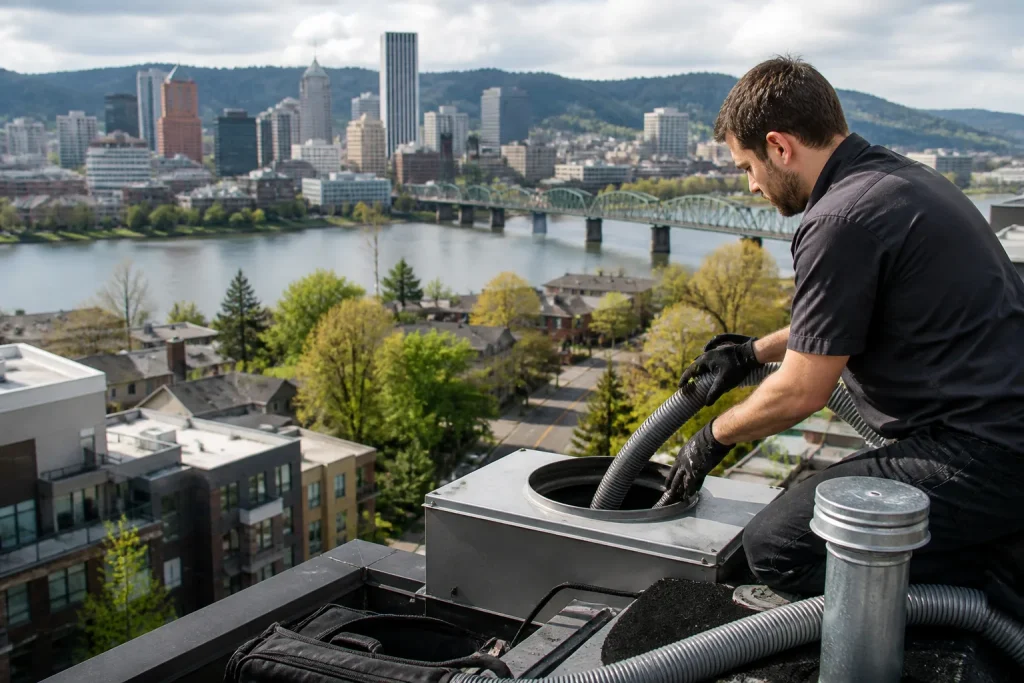
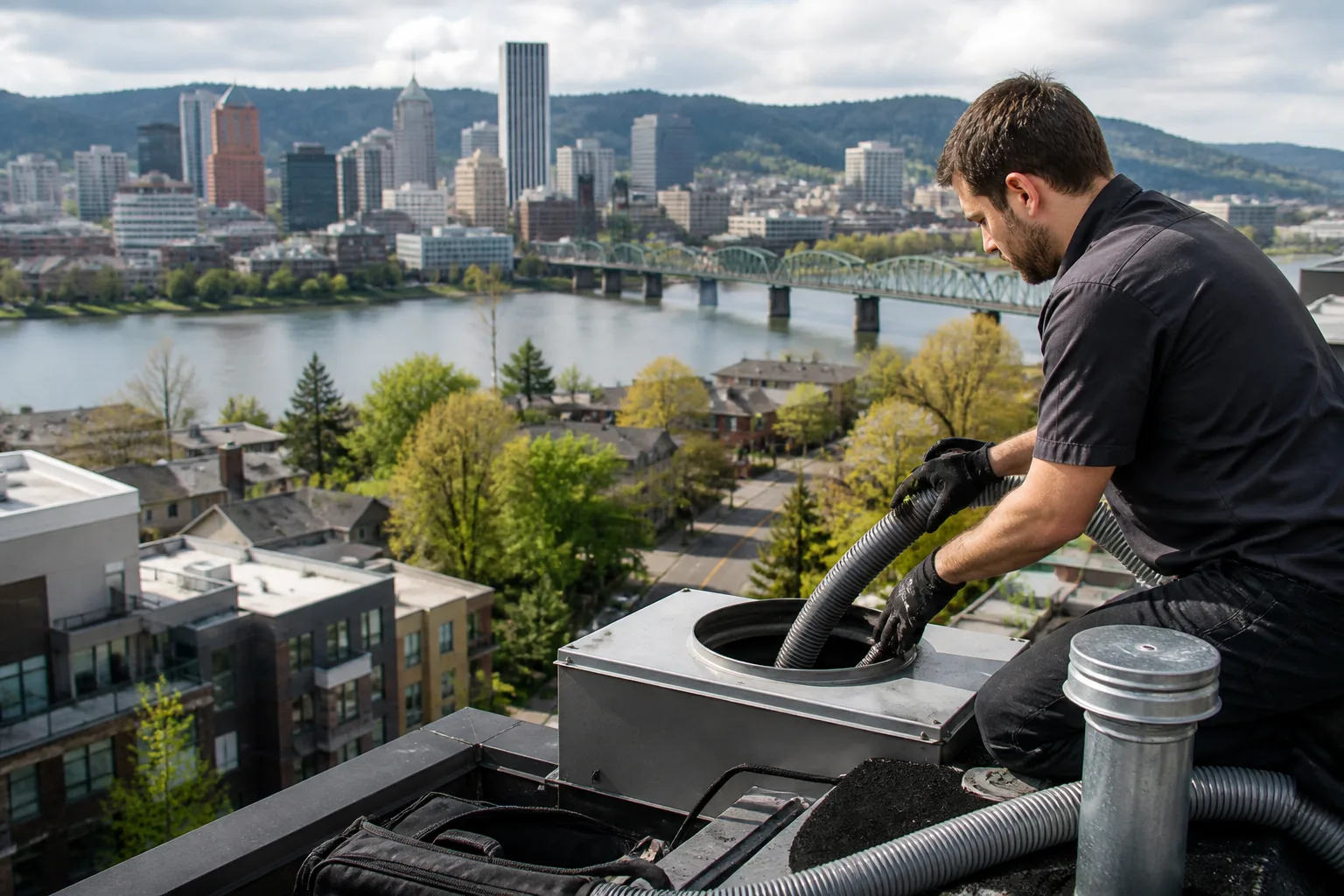
Ask what negative-air extraction system they use. Negative-air extraction means the equipment creates lower pressure inside the duct system than in the room, so dislodged dust travels toward the machine instead of back into your living space. Every legitimate duct cleaning setup pairs that vacuum with a source of agitation, because dust that has settled on duct walls doesn’t lift on its own.
Here’s what the answers tell you:
- Right answer: A named system and a source. Rotobrush and Nikro are two of the professional-grade names in this trade, and both are built for duct interiors rather than floors. A real answer sounds like “we run negative pressure with this machine and agitate the duct walls with this tool.”
- Better answer: They mention filtration that captures what the vacuum pulls. Abatement Technologies air filtration equipment is one example, and the point is containment: the contaminants come out of the system and into a filter rather than cycling through the house during the job.
- Red flag: “We use a very powerful vacuum.” Powerful relative to what? A shop vac from a hardware store is not duct cleaning equipment, and a company that can’t name its gear usually doesn’t own the right gear.
- Red flag: They can’t describe agitation. Vacuum-only cleaning reaches the dust the airflow already carries. It leaves the settled layer.
For a broader look at how this service should work in our city, see our page on air duct cleaning. The equipment question is the one to ask before you book anyone in Portland.
Why Hire a Duct Specialist Instead of a General HVAC Company?
Because equipment investment and technician training follow the business model. A general HVAC company earns its revenue from installation and repair. Duct cleaning is a line item it offers when a customer asks, and the scope of that work reflects it. A dedicated indoor-air specialist builds its entire operation around the duct system, which changes three things.
- Equipment. Professional duct cleaning systems cost real money. A company that cleans ducts as a small share of its revenue has little reason to buy them, so the work gets done with whatever vacuum is already on hand.
- Training focus. Our technicians have up to 8 years of experience, and that time goes into duct interiors, airflow, and repair rather than a full menu of HVAC work. Depth in one trade is a different thing from breadth across several.
- Diagnostic depth. When a specialist inspects a duct system, the inspection includes whether the ductwork itself is sound. Loose joints, disconnected runs, and torn flex duct aren’t a footnote; they’re a finding that changes what the job needs to be.
That last point is where specialization shows most clearly. A company that only cleans can only clean. If the inspection turns up crushed flex duct or a joint that’s been leaking into a crawlspace, a vacuum-and-invoice operation has nothing further to offer. We offer Steadfast Air Duct Cleaning as a specialist service, which means duct repair is part of the work rather than a referral we hand off.
How Do You Verify ACR Compliance Without Taking Their Word for It?
Verify the method, not the claim. Trade certification tells you a company knows the standard exists; it doesn’t prove the crew on your job will follow it. Ask what the process actually involves, and compare the answer against the broad strokes of the recognized cleaning standard: source removal, containment, agitation, and verification after the work. Those four pieces are what separate a documented process from a sales pitch.
What the method should include:
- Access points. A real duct cleaning job opens enough of the system to reach the whole thing, which often means cutting and resealing small access openings in the ductwork or plenum. A company that only works through the floor registers can’t reach the trunk lines.
- Agitation. Brushes, whips, or air tools run through each run to break the settled layer loose while negative pressure holds it in the airstream heading for the filter.
- Containment. Filtration on the extraction side so dislodged material is captured, not redistributed.
- Post-cleaning verification. A look back inside the system after cleaning, with photos, rather than a declaration that it’s done.
In our experience, the companies that welcome this line of questioning are the ones already doing the work this way. The ones that get defensive about it aren’t. Either answer is useful to you, and you learn it in one phone call. If you’d like the process explained before you commit to anything, ask for a free estimate rather than a price.
What Are the Scope-of-Work Red Flags in Portland?
The biggest red flag is a quote given before anyone asks about your home. Duct cleaning is priced per system, and a system’s size, layout, and condition determine the work. A company that quotes a number without asking a single question about the system is quoting an average and hoping your house matches it.
Ask yourself whether the person on the phone asked about:
- System size and layout. How many runs, how many levels, where the air handler sits. A single-story ranch and a three-story house with a finished basement are not the same job.
- Duct material. Sheet metal, flex duct, and duct board each demand different tools and different care. Flex duct in particular tears if it’s treated like rigid metal.
- Home age. Older housing stock in Portland neighborhoods like Sellwood, Laurelhurst, and Alameda often has ductwork that has been modified, extended, or patched over the years. Those modifications are where leaks and disconnected runs hide.
- Dryer vent access. A thorough assessment includes the dryer vent, because lint buildup in that line is a documented residential fire risk. A company that treats the dryer vent as an afterthought has skipped part of the assessment.
None of this is guesswork; it’s the same set of questions a competent technician asks on arrival. When they’re asked before the quote, the number you get is closer to the number you’ll pay. Avoid any provider who prices per vent, because a per-vent price rewards speed and penalizes thoroughness. Our dryer vent cleaning work is priced and scoped the same way: per system, agreed before anything starts.
What Should You Get After the Job Is Done?
More than a handshake and an invoice. Legitimate duct cleaning ends with documentation, and the standard is simple: photos of what the inside of the ducts looked like before and after, a written account of anything the inspection turned up, and a conversation about what it means for the system going forward.
A proper post-job deliverable includes:
- Before-and-after photos. Your ducts, not stock images from a brochure. You should be able to see the change.
- Airflow observations. A technician who knows the system can tell you whether what came out matched what the system’s condition suggested going in, and whether any run is underperforming.
- A written account of repair needs. If the inspection found a leaking joint, a crushed section, or a disconnected run, that belongs on paper so you can decide what to do about it.
- The scope of the repair conversation. If the ductwork needs sealing or patching, you should hear it described in plain terms: what’s wrong, where, and what fixing it involves.
This is where our repair capability earns its keep. We don’t just clean ducts; we fix them when they’re damaged. Sealing, patching, and restoring compromised ductwork is a standalone service for us, which means a finding during cleaning doesn’t become a shrug. It becomes a repair with an estimate attached.
When to Call a Pro
If dust reappears on your surfaces within days of cleaning, if you notice a musty smell when the system kicks on, if any room never gets enough airflow, or if the dryer is taking longer than it used to, those are all reasons to have someone look at the system. Same if it’s simply been years since the ducts were last cleaned and you don’t know their history. Duct cleaning isn’t a repair and won’t fix a failing furnace, but a dirty system and a damaged one often show the same symptoms, and only an inspection tells you which you have.
Related services in Portland
If your dryer vent hasn’t been cleared in a while, a clogged dryer vent isn’t a nuisance; it’s a fire hazard, and it’s worth having looked at. Our work in Portland covers duct cleaning, dryer vent cleaning, and duct repair as three focused services rather than a broad menu. Call (877) 957-0767. We answer 24/7. Fast dispatch from 7am to 7pm, Sunday through Friday.
What happens when you call
- 1
A real person answersNo phone trees – you reach a local pro.
- 2
You get an upfront price rangeHonest numbers before anyone is dispatched.
- 3
A background-checked tech heads outLicensed & insured, dispatched right away.
- 4
You approve before work beginsNothing starts until you say go.
The Bottom Line
Choosing a duct cleaner comes down to a few verifiable things: named professional extraction equipment paired with real agitation, containment so the dust leaves your home rather than recirculating through it, a specialist’s diagnostic eye for the ductwork itself, questions asked before the quote, and documentation handed over after the job. Ratings are a starting point; equipment and scope are the actual deciding factors. If you’re in Portland and need help, Steadfast Air Duct Cleaning offers free estimates. We use Rotobrush and Nikro systems, not consumer vacuums, and we run Abatement Technologies filtration on every job. Call (877) 957-0767 for a free estimate.
Frequently Asked Questions
Most Portland homes land somewhere in the low hundreds to the high hundreds of dollars for a whole-system clean, and the final number depends on system size, layout, access, and condition. The written estimate is what sets the price. Call (877) 957-0767 for an exact quote; estimates are free.
Membership is a useful starting signal, but it isn’t proof of what will happen in your house. Ask instead which extraction system they’ll use, how they agitate the duct walls, and whether the cleanup comes with before-and-after photos. A company that can answer all three clearly is doing the work properly. Call (877) 957-0767 and ask us the same questions.
For most homes, every few years is reasonable, and the right interval depends on the system and the house rather than a fixed calendar. Homes with pets, recent remodeling, or occupants with allergies often benefit from a closer look. If you’re unsure, an inspection settles it. Call (877) 957-0767 for a free estimate.
Cheap quotes usually reflect a smaller scope: vacuum-only cleaning, no containment filtration, no agitation, no inspection, and no documentation afterward. What’s left out is the part that actually removes the settled layer. The price is set per job by a written estimate, so ask what’s included before comparing numbers. Call (877) 957-0767 for an itemized estimate.
Written by the team at Steadfast Air Duct Cleaning.
Need Air Duct Cleaning Help?
Call Steadfast Air Duct Cleaning - licensed & insured, with free written estimates in Portland.
(877) 957-0767