
Last updated November 15, 2026
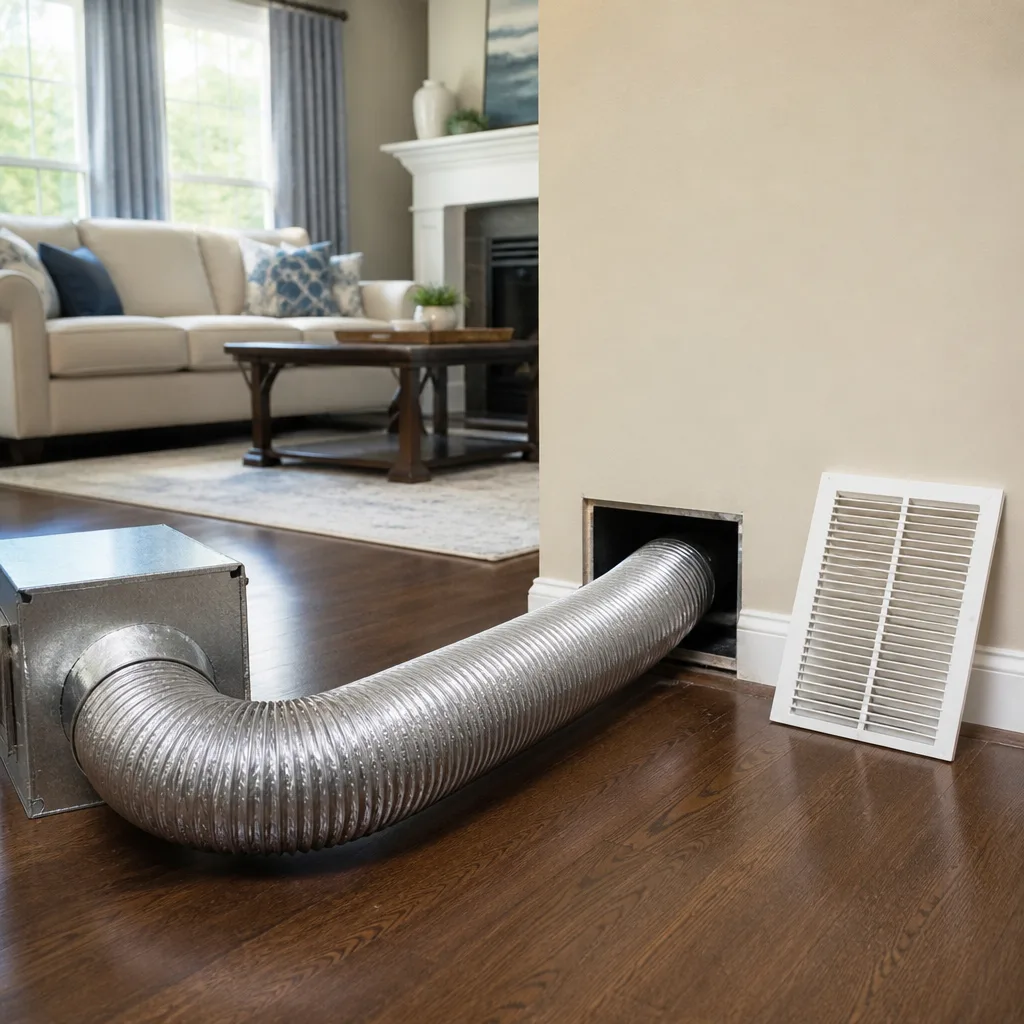 Whole-home duct cleaning
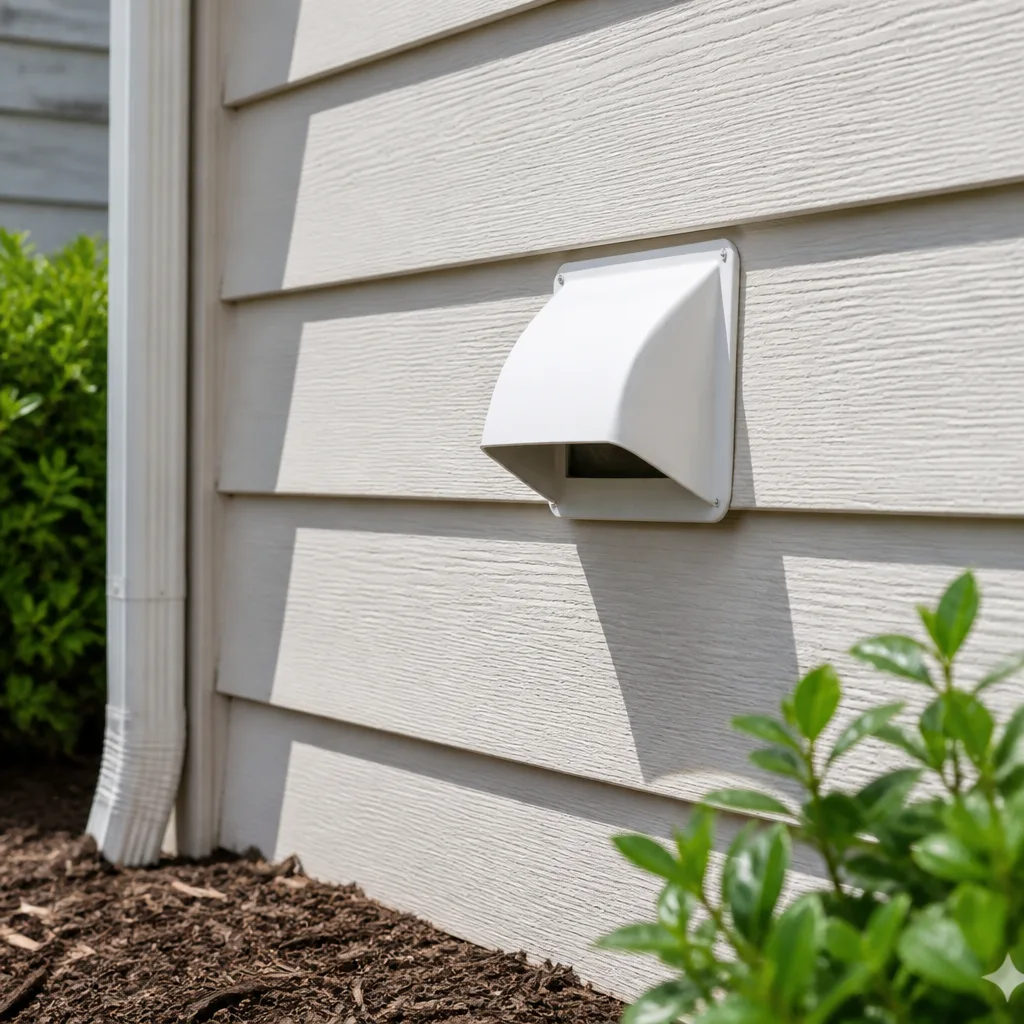 Dryer vent cleaning
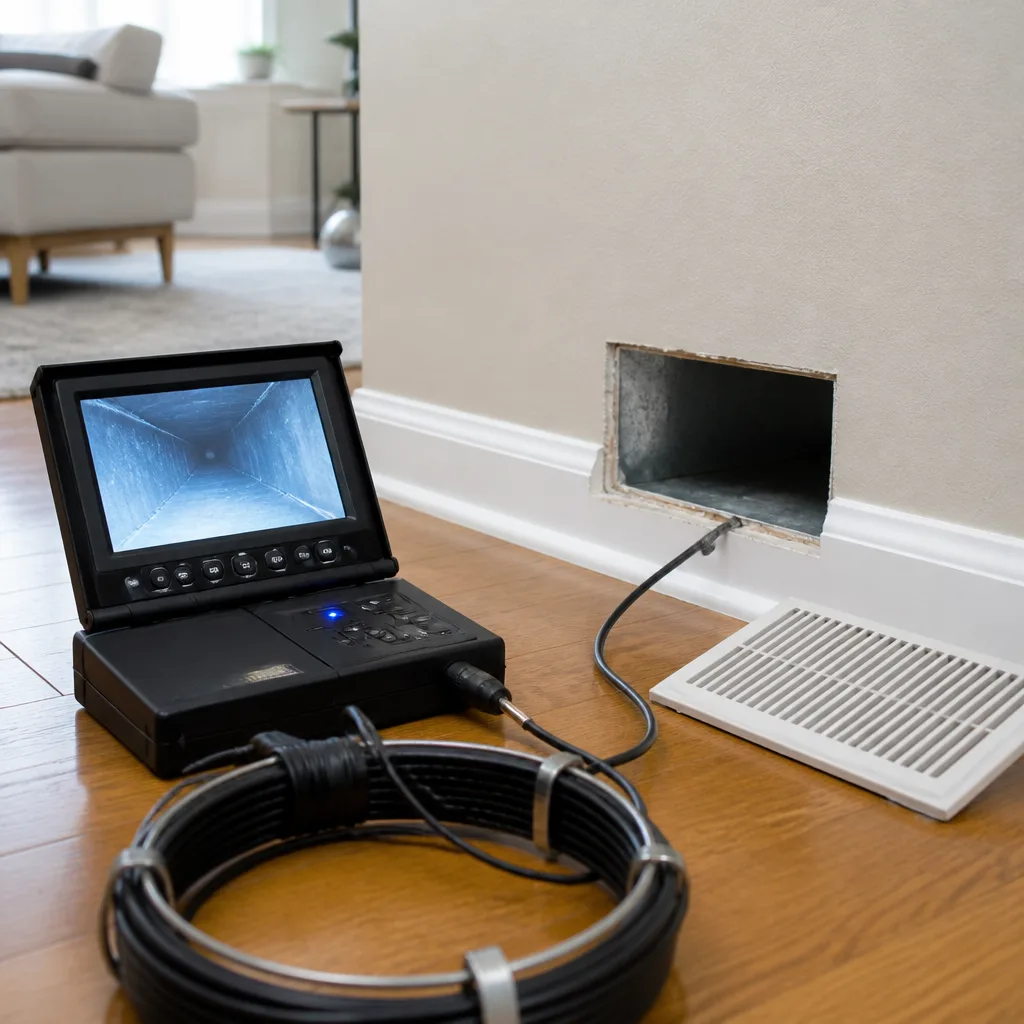 Camera inspection
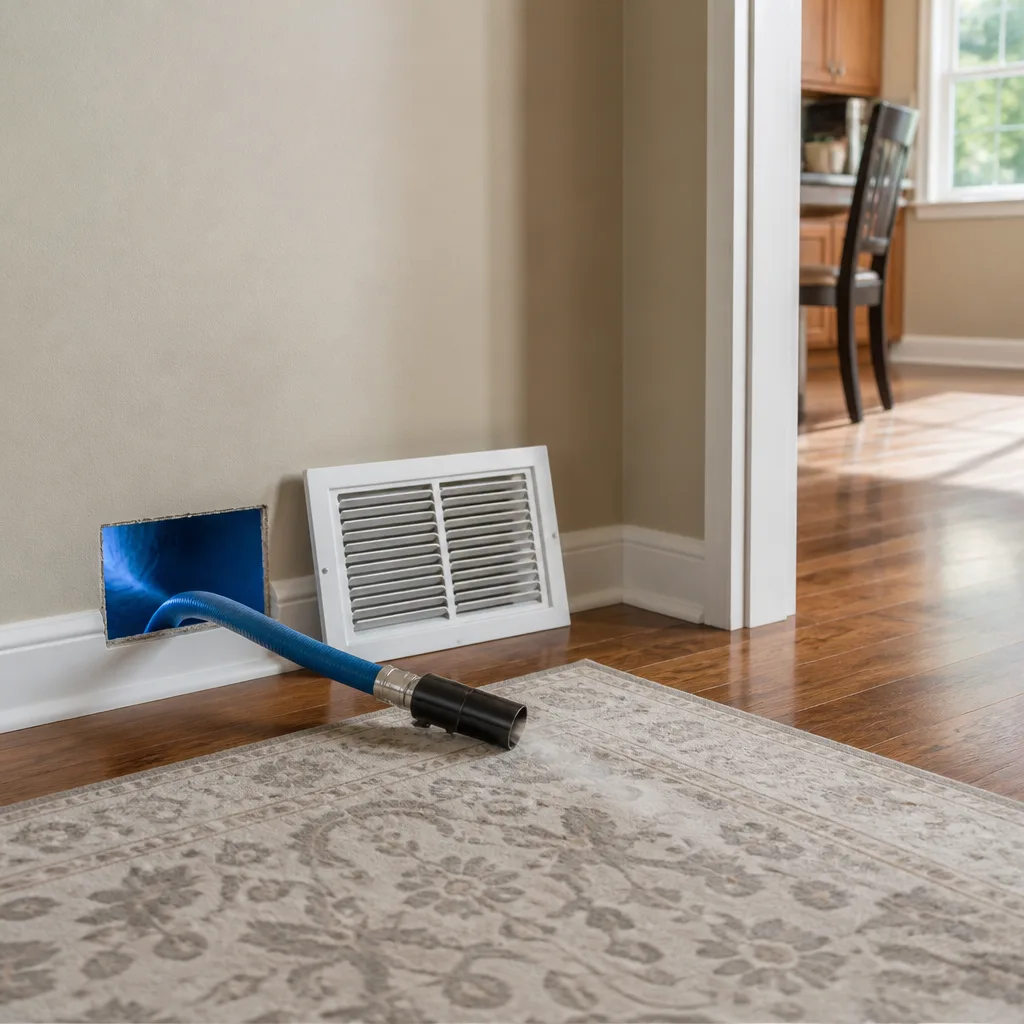 Sanitizing & deodorizing
Whole-system duct and dryer vent check with before-and-after photos - you see exactly what came out of your vents
That "$99 whole-house special" is a bait ad - the real number appears once they are in your hallway, or the "clean" is a shop-vac at the register. We photograph the inside of your ducts before and after instead.
Air Duct Cleaning Troubleshooting in Portland: Common Problems and How to Fix Them
If your HVAC technician replaced the filter and said everything looks fine, but your upstairs rooms are still stuffy and your energy bill keeps climbing, the problem almost certainly isn’t the unit. It’s what’s between the unit and your vents. Most homeowners in Portland assume uneven airflow, musty smells and rising bills point to a failing furnace or heat pump. In our experience, a good share of those complaints trace back to the duct system itself: crushed flex runs, unsealed joints, moisture-driven growth inside the liner, or a decade of debris that no filter ever catches. This guide shows you how to read your system’s symptoms the way a specialist does, so you can tell a duct problem from an equipment problem before you spend money on the wrong fix.
Quick Answer
Most air duct problems in Portland come down to one of six issues: blocked or crushed duct runs, unsealed joints leaking conditioned air, moisture and microbial growth at flex-duct connections, heavy debris buildup, damaged or torn duct liner, or a dryer vent packed with lint. You can narrow it down yourself with a few simple checks (pressure at the vents, temperature differences between rooms, and odor type), but confirming and fixing it usually takes professional equipment. Cleaning solves debris and surface contamination. Sealing or section replacement solves leaks and breaches. Knowing which one you’re facing is the whole game.
Styles & brands we work with
- Whole-home duct cleaning
- Dryer vent cleaning
- Camera inspection
- Sanitizing & deodorizing
Table of Contents
- How Do You Tell a Duct Problem From an HVAC Problem?
- What Do Different Duct Odors Actually Mean?
- Why Does Portland’s Wet Climate Create a Distinct Duct Failure Pattern?
- How Do Professionals Pressure-Test Duct Integrity?
- Cleaning Fix vs. Repair Fix: Which One Do You Actually Need?
- Why Is Dryer Vent Troubleshooting a Separate Skill?
- What Can You Check Yourself Before Calling Anyone?
- Common Mistakes to Avoid
How Do You Tell a Duct Problem From an HVAC Problem?
You can separate a duct problem from an equipment problem with two cheap checks before anyone comes out: airflow at the vents and temperature difference between rooms. If your furnace or heat pump is running and you feel weak airflow at some registers but strong airflow at others, the equipment is probably fine and the duct run is the problem. If every vent feels weak, the issue may be equipment-side, or it may be a main trunk restriction. And if one room runs several degrees hotter or colder than the rest of the house, a crushed or disconnected run is the usual suspect.
Here’s how to run the check in order:
- Hold a piece of tissue against each supply register. It should pull toward the grille or flutter steadily. A register that barely moves the tissue is starved of air.
- Compare rooms. Note which rooms are weak and which are strong. A pattern (upstairs weak, downstairs strong, or one far room weak) points straight at duct routing.
- Measure temperature at the supply and the return. A healthy system delivers a noticeable temperature difference between the air going in and the air coming out. If the supply air is only slightly different from room temperature, you may be losing conditioned air in the run before it ever reaches the register.
- Run the system fan only, then listen. Whistling, rattling or a whooshing sound at a register often means a restriction or a partially collapsed flex run behind the wall.
- Check the filter. A clogged filter mimics a duct problem by choking the whole system. Replace it and re-test before drawing conclusions.
This is the diagnostic order we use on arrival in Portland homes: rule out the filter and the equipment first, then look at the distribution system. It saves homeowners from paying for a service they don’t need. If the pattern points duct-side, the next step is understanding what kind of duct problem you’re dealing with, which usually starts with your nose.
What Do Different Duct Odors Actually Mean?
Odor type is one of the most useful diagnostic signals a homeowner can report, because each smell category points to a different duct condition: musty means moisture and microbial growth, burnt means heat or motor trouble, and chemical means contamination or material off-gassing. Learning to describe your smell accurately shortens the diagnosis considerably.
Musty or earthy smell
A musty smell points to moisture inside the system and microbial growth on duct surfaces, insulation or the evaporator coil area. In Portland this often shows up after a damp stretch when the system has been running cool. Musty odors rarely clear with a filter change, because the growth is on the duct liner and interior surfaces the filter never touches.
Burnt or hot-dust smell
A burnt or scorched smell at startup is often just dust burning off a heat exchanger on first use of the season, which fades in a few minutes. A burnt smell that persists or returns mid-cycle is different: it can indicate overheating equipment and should be checked by an HVAC technician before anything else. Duct cleaning won’t fix a motor or heat exchanger problem, and we tell Portland homeowners so plainly.
Chemical or solvent smell
A chemical smell can come from deteriorated duct liner, adhesives, or off-gassing materials near the air handler. Older flexible duct with failing internal liner can shed material and produce this smell. This is a repair case, not a cleaning case, because the damaged material has to be removed.
Stale or “old house” smell with no clear source
This is the classic debris smell: years of settled dust, pet hair and construction residue sitting in the runs. It gets stronger when the system first kicks on. This is where a deep clean with proper negative-air containment makes the most obvious difference.
Why Does Portland’s Wet Climate Create a Distinct Duct Failure Pattern?
Portland’s wet climate produces a specific duct failure pattern: moisture intrusion at flex-duct joints and connections causing microbial growth that vacuuming alone won’t resolve. The rainy season here keeps ambient humidity high for months. That humidity finds its way into crawl spaces, attics and wall cavities where flex duct runs, and the joints are the weak points. A joint that’s taped but not sealed, or a flex connection pulled slightly loose, becomes a condensation point. Moisture collects, dust collects on the moisture, and growth follows.
Here’s what that looks like in practice:
- Flex duct is more vulnerable than rigid duct. Its corrugated interior traps dust and moisture in a way smooth rigid duct doesn’t, and the sag between hangers is a natural collection point.
- Crawl space and attic runs sit in the dampest parts of a Portland house. Insulation that’s been compressed, shifted or soaked loses its ability to keep the duct surface above the dew point, so condensation forms on the outside and sometimes the inside.
- Joints fail quietly. A taped joint that’s peeled or a collar that’s slipped doesn’t announce itself. You get a slow leak of conditioned air, a cool damp spot, and eventually a smell.
- Vacuuming alone doesn’t fix it. If the growth is on wet insulation or a failing liner, pulling debris out of the run doesn’t remove the source. The duct has to be dried, the compromised section repaired or replaced, and the joint properly sealed.
This is the single biggest difference between duct work in Portland and in a dry climate. A blow-and-go cleaning that works in a desert town can leave the actual problem in place here. If you notice a musty smell that returns each rainy season, that’s the pattern to take seriously. Our air duct cleaning service starts by identifying these moisture points before any equipment runs. If you want to understand the full process we follow, our team at Steadfast Air Duct Cleaning walks through it in detail.
How Do Professionals Pressure-Test Duct Integrity?
Professionals pressure-test duct integrity by running the system under controlled airflow while measuring pressure and looking for leaks with negative-air containment in place, which reveals breaches you can’t see with a visual inspection. A flashlight and a mirror only show you the runs you can reach. Pressure testing reveals what’s happening in the runs behind walls and under floors.
How the test works
- Containment first. We set up negative-air pressure with Abatement Technologies filtration equipment so dislodged debris is captured rather than blown through the house. This is also the moment any pre-existing breach starts to show itself, because the containment pulls air through gaps that were invisible before.
- Baseline pressure reading. We measure static pressure at the air handler and at supply and return points with the system running normally. A high static pressure reading relative to the system’s design points to a restriction somewhere in the trunks or runs.
- Zone isolation. Supply runs are checked individually by watching pressure response and airflow at each register. A run that doesn’t respond the way its length suggests has a breach or a blockage.
- Smoke or tracer check at suspect joints. Where pressure data flags a leak, a tracer check confirms it visually. This is how a taped joint that looked fine from the outside gets found.
- Camera inspection in the interior of suspect runs. Nikro equipment lets us agitate and inspect the duct interior, so we can see liner damage, moisture staining and debris distribution directly instead of guessing.
The point of all this isn’t to make the job sound complicated. It’s to avoid the classic mistake of cleaning a system that needs sealing, or sealing a system that needs cleaning. Rotobrush agitation and brush heads work beautifully on debris. They do nothing for a leak. Knowing which you have before you start is the difference between a fix and a repeat visit. For a deeper look at how the cleaning equipment works in a residential setting, see our Portland service overview.
Cleaning Fix vs. Repair Fix: Which One Do You Actually Need?
The choice between a cleaning fix and a repair fix comes down to the condition of the duct material itself: if the debris is the problem, cleaning fixes it; if the material is damaged or leaking, cleaning won’t hold and the run needs sealing or replacement. Here’s how to tell which one you’re facing.
When cleaning is the actual answer
- The duct material is intact and the smell is stale or musty but returns only when the system runs.
- Airflow is weak at some registers but the run itself is intact (blockage, not breach).
- There’s visible dust discharge from registers when the system starts up.
- A remodeling or renovation project left construction dust in the runs.
- There’s a long history of pets or smoking in the home and no visible liner damage.
For these, Rotobrush agitation plus negative-air containment removes the source and the symptoms follow.
When repair is the actual answer
- Flex duct that’s crushed, torn, disconnected or collapsed in the attic or crawl space.
- Joints that are visibly separated or that fail a pressure test.
- Internal liner that’s shedding or degraded (often paired with a chemical smell).
- Moisture staining and growth on insulation that can’t be cleaned out of the material.
- Runs where the duct itself has been compromised by rodents or construction.
For these, we clean the rest of the system and seal, patch or replace the affected section. We offer Air Duct Repair as a standalone service precisely because this pattern is common in Portland homes, and a cleaning-only company can’t resolve it. If you want to know whether repair is what you’re looking at, our dryer vent cleaning page covers the parallel logic on the vent side, where “clean vs. replace” comes up just as often.
Why Is Dryer Vent Troubleshooting a Separate Skill?
Dryer vent troubleshooting is a separate skill because the failure mode is different: instead of air quality, you’re dealing with lint buildup that the NFPA cites as a leading cause of residential fires. A clogged dryer vent isn’t a nuisance, it’s a fire hazard. A dryer that takes two cycles to dry a load is a symptom, not a minor annoyance, and it’s usually lint accumulation somewhere in the run.
Here’s what a proper dryer vent diagnosis involves:
- Airflow measurement at the exhaust termination. If the dryer runs but the exterior flapper barely moves, the restriction is somewhere in the run.
- Route inspection. The ideal dryer vent run is short, straight and rigid. A long run of flexible corrugated duct with multiple elbows collects lint at every turn.
- Interior agitation and extraction. Rotobrush and Nikro equipment can agitate and extract lint from the run without tearing the duct, which is the difference between a real cleaning and a vacuum at the termination.
- Termination check. A blocked or screened exterior termination is a common and easily missed cause of restricted airflow.
- Post-clean airflow check. Confirm the change in airflow so you know the work actually happened.
If a Portland homeowner calls about a dryer that’s slow, we start with the vent, not the appliance. Most slow-drying complaints that aren’t the appliance’s fault trace to the vent run. If you’re dealing with that symptom right now, the call is the fastest route to an answer: (877) 957-0767. We answer 24/7. Fast dispatch from 7am to 7pm, Sunday through Friday.
What Can You Check Yourself Before Calling Anyone?
You can check the filter, the register airflow, the room-to-room temperature pattern, the visible duct connections you can reach, and the dryer vent termination before calling anyone. These five checks cost nothing and give a professional the information they need to diagnose quickly. None of them involve opening the air handler, disconnecting ductwork or touching electrical components, so they’re safe for a homeowner to run.
- The filter. Replace a clogged filter and re-check airflow. Many “duct problems” are filter problems.
- Register airflow with a tissue. Note which registers are weak and which are strong. Write down the pattern.
- Room temperature differences. Compare a weak-airflow room to a strong-airflow room with the system running for a few minutes.
- Visible duct connections. In an accessible attic or crawl space, look at flex duct joints you can reach without moving anything. You’re looking for separated collars, peeling tape, crushed sections, or visible moisture staining. Don’t touch what you can’t see, and don’t attempt to reseal anything that’s clearly damaged.
- The dryer vent termination. With the dryer running, check the exterior flapper. It should open and stay open with strong airflow.
One safety caveat matters here: don’t open the air handler compartment or the electrical panel to check anything. Those areas involve live voltage and are a job for a trained professional. Likewise, don’t attempt to re-tape or reseal duct joints in confined crawl spaces yourself. The information you gather by watching and listening is worth far more than a repair attempt.
Common Mistakes to Avoid
- Attributing every airflow complaint to the HVAC unit. A technician who only services the equipment will replace parts that were never the problem. If your airflow is uneven room to room, insist on a duct-side check too.
- Hiring a blow-and-go cleaner with no containment. A vacuum without negative-air filtration just recirculates what it dislodges. In a Portland home with moisture-related growth, that’s worse than not cleaning at all.
- Cleaning when the real answer is repair. A torn or crushed flex run will still leak after it’s cleaned. Ask the company up front whether they offer duct repair, not just cleaning.
- Ignoring a musty smell that returns every rainy season. In Portland, that pattern points to moisture at flex joints. Cleaning without addressing the moisture source produces a repeat customer, and not in the way you want.
- Treating the dryer vent as an afterthought. A dryer that takes two cycles to dry is a fire-risk signal, not a slowness problem. The NFPA flags lint buildup as a leading cause of residential fires, and Portland homes with long flex runs are especially exposed.
- Choosing on price alone. The cheapest quote is often the one that vacuums the plenum and calls it done. Ask what equipment the company uses and whether they do containment, and you’ll separate the specialists from the generalists fast.
- Forgetting the dryer vent when the ducts get cleaned. These are two separate systems and both accumulate. A duct cleaning that skips the dryer vent leaves a documented fire risk in place.
See the difference
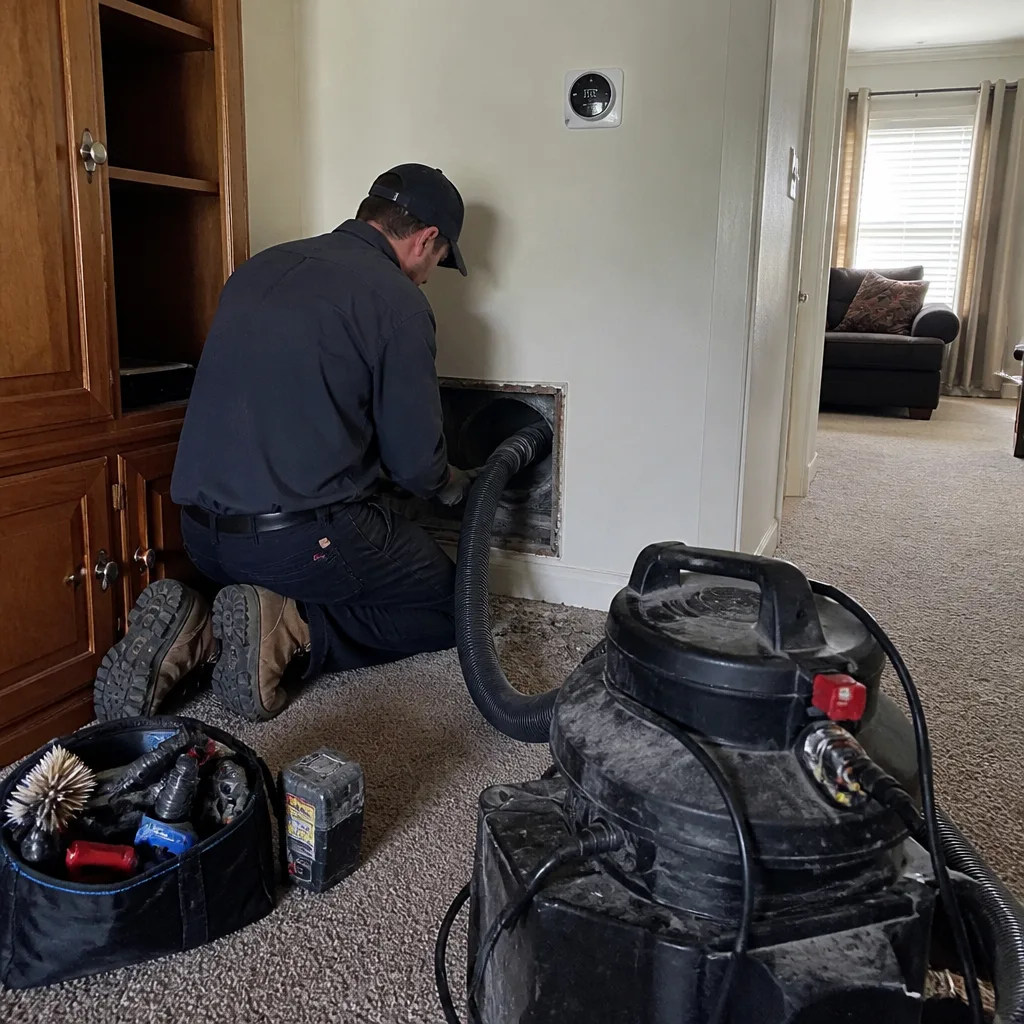 Before
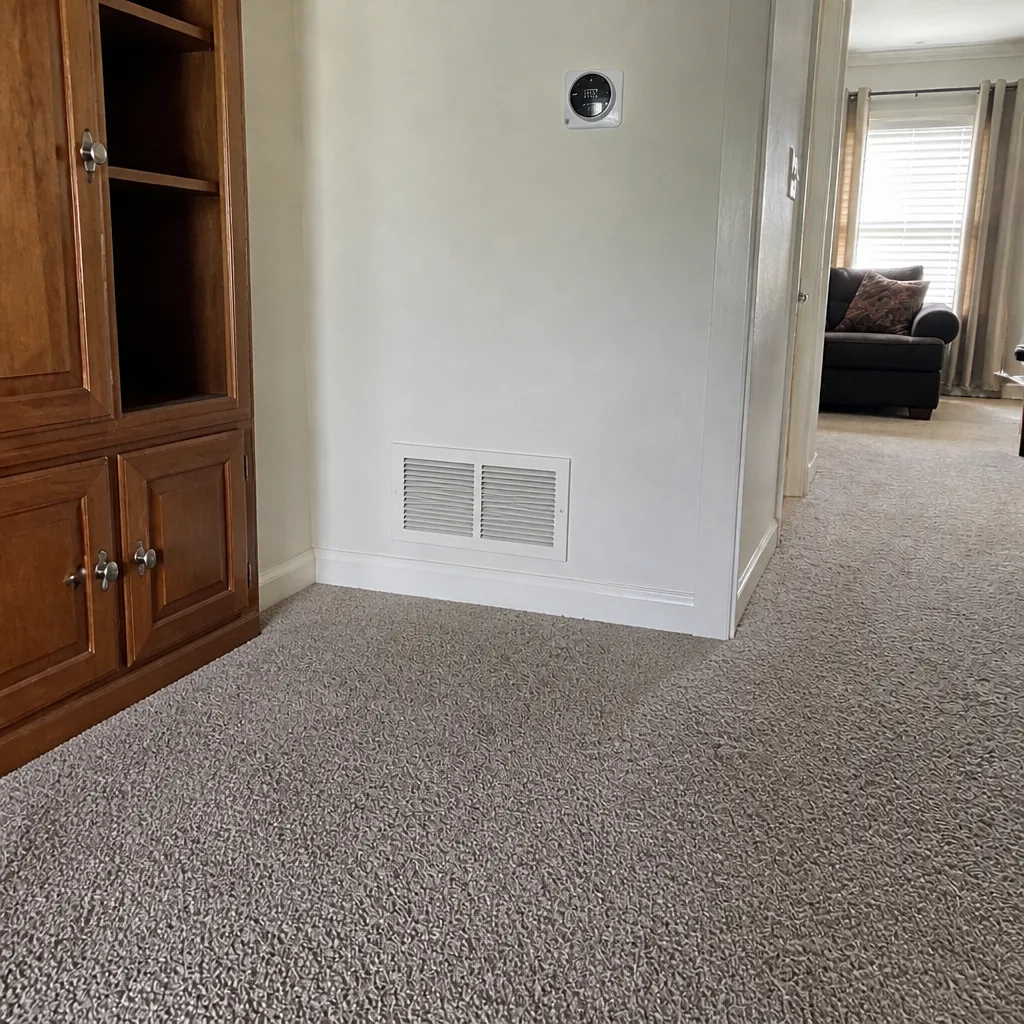 After
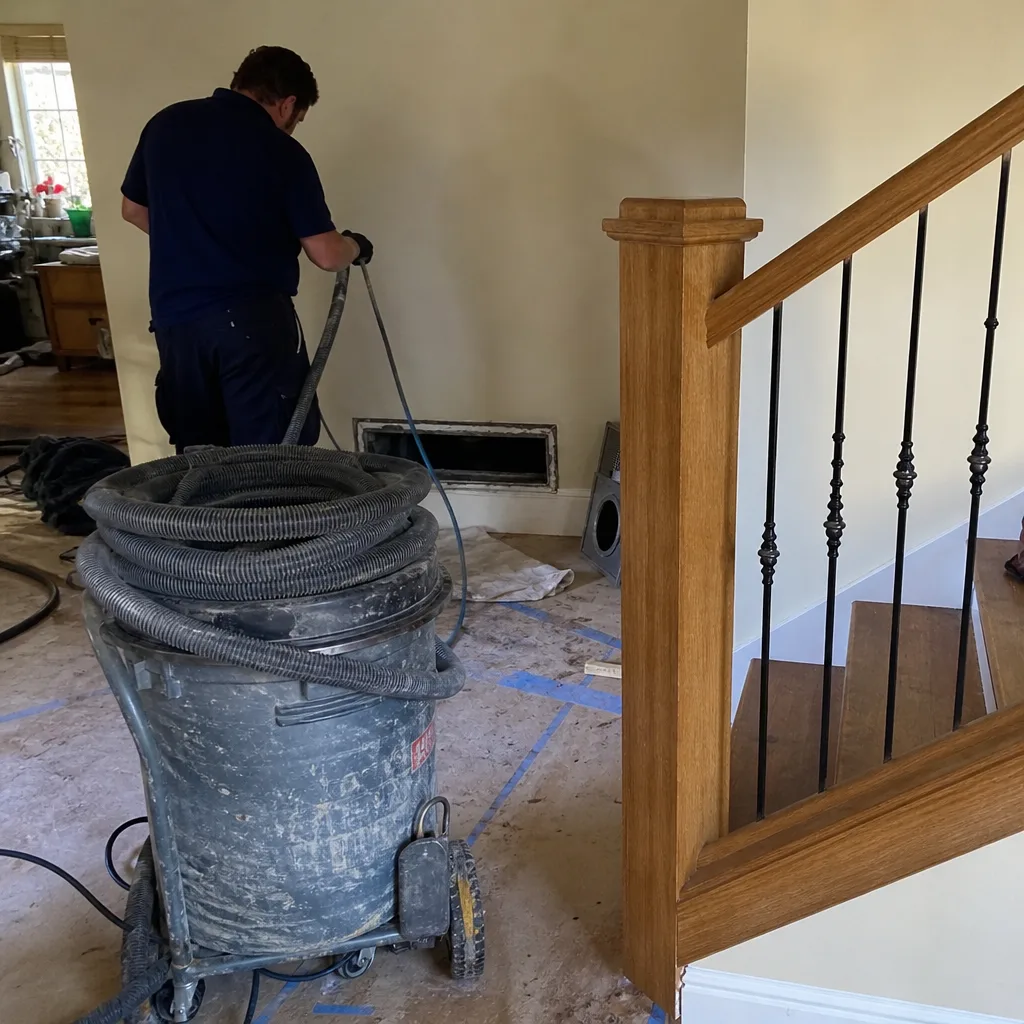 Before
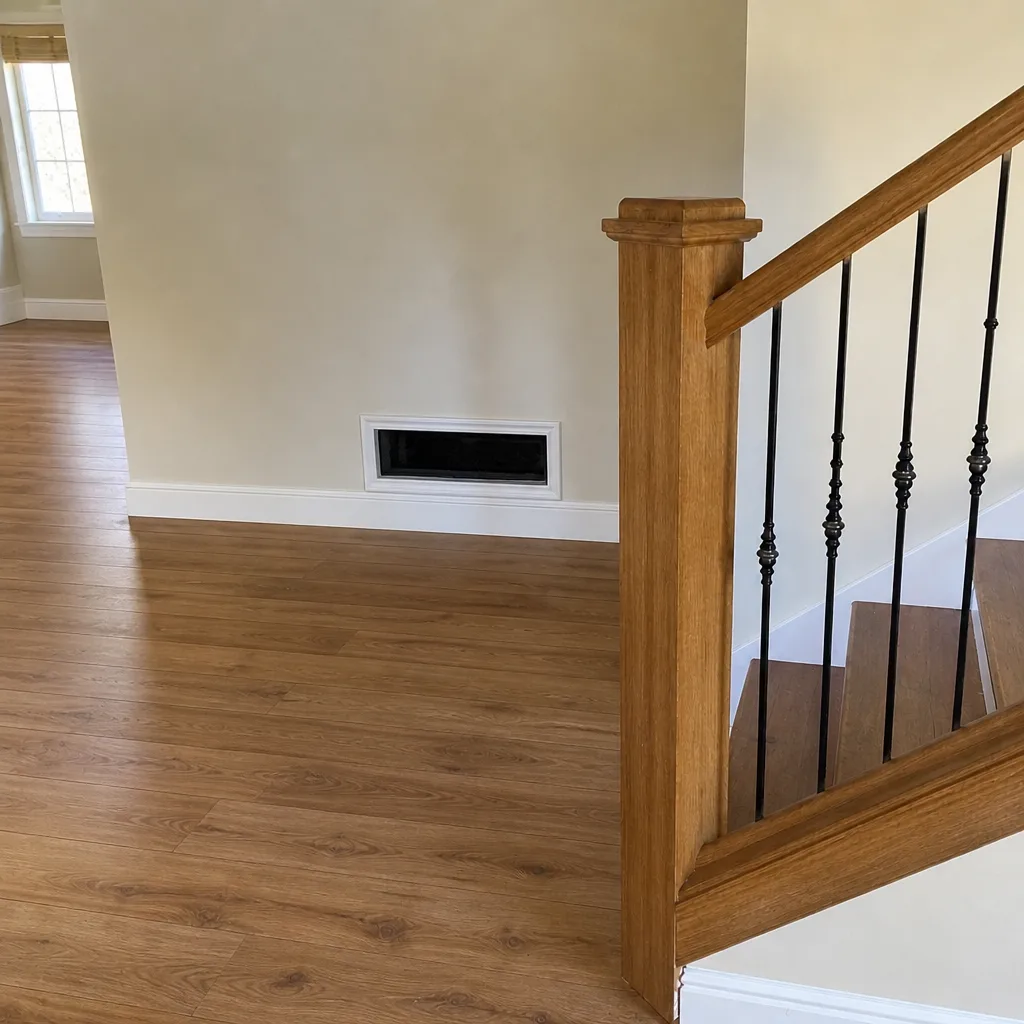 After
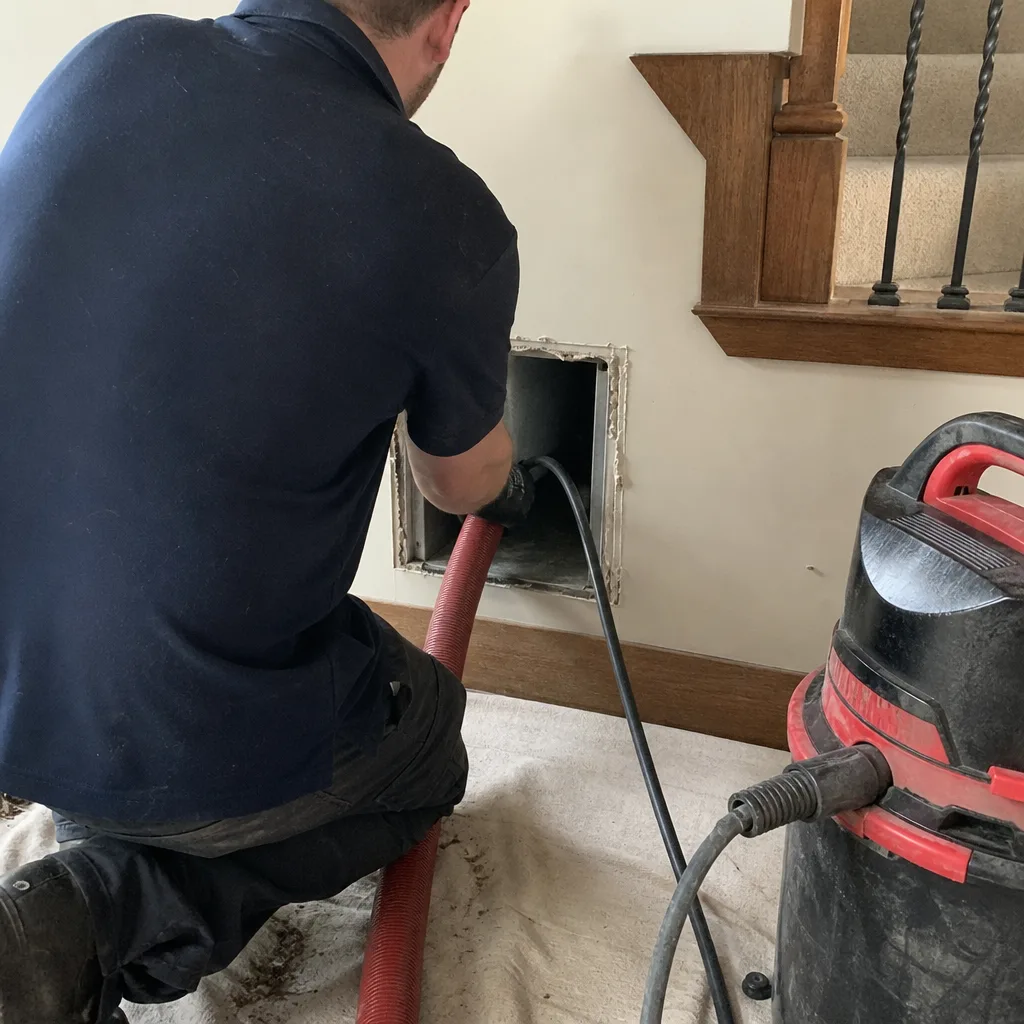 Before
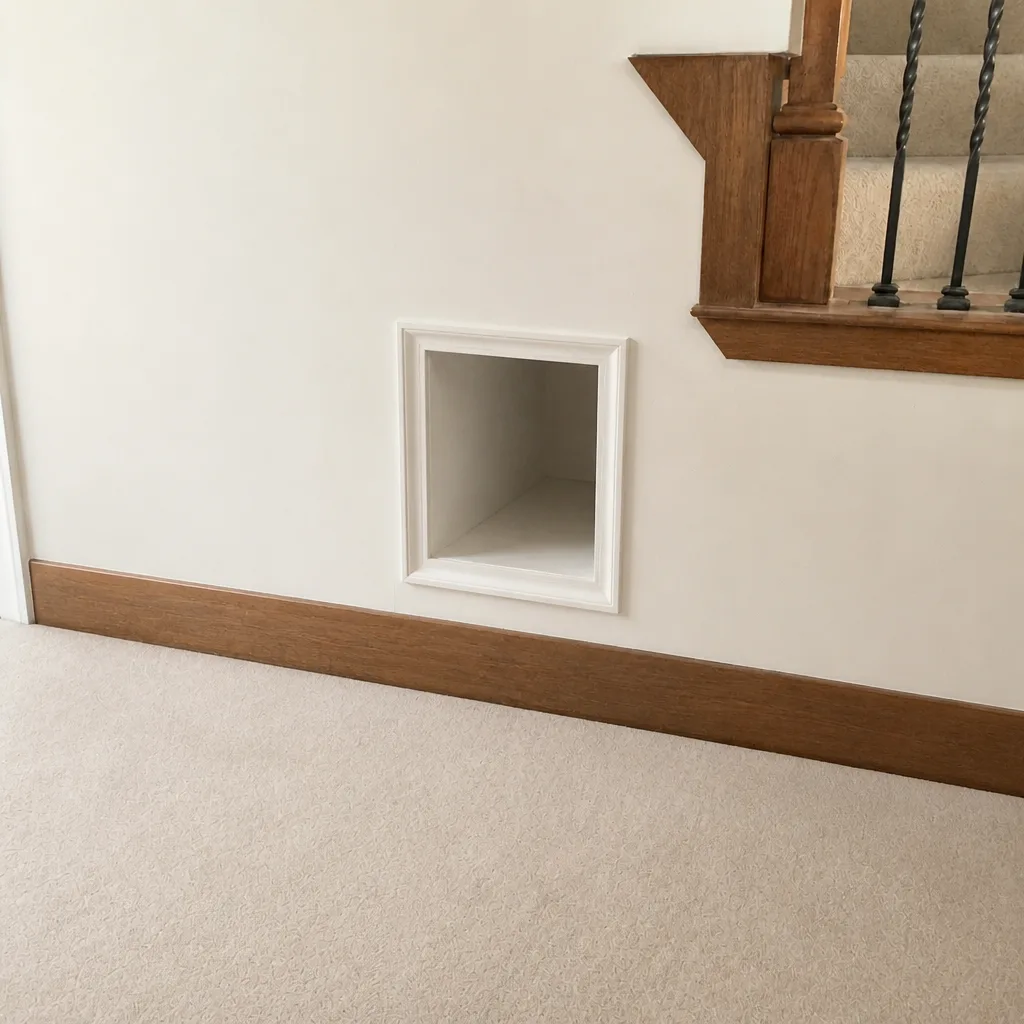 After
When to Call a Professional
Call a professional when the pattern of symptoms points duct-side and a filter change hasn’t helped, when you smell musty or chemical odors that return with the system, when one room is consistently off-temperature, or when your dryer needs two cycles. Call right away if you smell a persistent burnt odor mid-cycle (that’s an equipment check, not a duct one), see water staining on duct insulation, or notice visible lint around the dryer termination. For a Portland home with a confirmed leak, a degraded liner, or growth on wet duct materials, cleaning alone won’t fix it and a repair-capable specialist is the right call. Steadfast Air Duct Cleaning offers free estimates in Portland, and we use Rotobrush and Nikro equipment with Abatement Technologies containment on every job so you can see what we found and what we fixed. Call (877) 957-0767. We answer 24/7. Fast dispatch from 7am to 7pm, Sunday through Friday.
Frequently Asked Questions
If the duct material is intact and the issue is debris, odor or static dust, cleaning is the fix. If the duct is crushed, torn, disconnected, lined with degraded material, or wet enough to have growth on the insulation, you need repair. A pressure test during a professional inspection confirms which. Call (877) 957-0767 for a free estimate if you want a definitive answer.
A musty smell when the heat comes on usually means moisture and microbial growth somewhere in the duct system, often at flex joints that took on damp air during the rainy season. The first blast of heat stirs the growth and distributes the smell. Cleaning alone won’t resolve it if the moisture source is still active, so the joint or section needs to be addressed too. Call (877) 957-0767 to book an inspection.
Yes. The NFPA cites lint buildup in dryer vents as a leading cause of residential fires, and the mechanism is straightforward: lint accumulates, airflow drops, heat builds up in the dryer and the duct, and the lint ignites. A dryer that takes two cycles to dry a load is the most common warning sign. Call (877) 957-0767 to schedule a dryer vent cleaning.
Often, yes. A temperature split between floors in a Portland home usually points to a crushed or disconnected run to the upstairs, or to a main trunk restriction. Sometimes it’s a zoning and balancing issue. A pressure check and airflow comparison across registers tells you which. Call (877) 957-0767 for a free estimate and we’ll walk through what we find.
We use Rotobrush and Nikro professional-grade systems, the same equipment commercial contractors use, with Abatement Technologies filtration on every job to capture what’s dislodged. A shop vacuum doesn’t have the airflow or the containment to clean a residential duct system properly, and it can push dislodged debris back into the house. Call (877) 957-0767 for a free estimate.
You should see before-and-after photos of your own ductwork and a post-clean airflow check. A professional job also includes containment that stays in place until the work is complete, and a clear explanation of what was found. If a company can’t show you the difference, that’s your answer. Call (877) 957-0767 and we’ll show you what we find in your system.
The Bottom Line
Most duct complaints that Portland homeowners bring to an HVAC technician are duct-side problems, not equipment problems. Uneven airflow, room-to-room temperature splits, recurring musty odors and slow-drying laundry all point to specific conditions inside the distribution system. Read your symptoms in order (filter, airflow pattern, temperature, odor type, dryer termination), and you’ll know whether you’re looking at a cleaning fix, a repair fix, or something the HVAC technician needs to see. When the pattern points duct-side, call Steadfast Air Duct Cleaning at (877) 957-0767 for a free estimate. We answer 24/7. Fast dispatch from 7am to 7pm, Sunday through Friday.
Written by the team at Steadfast Air Duct Cleaning.