
Last updated November 15, 2026
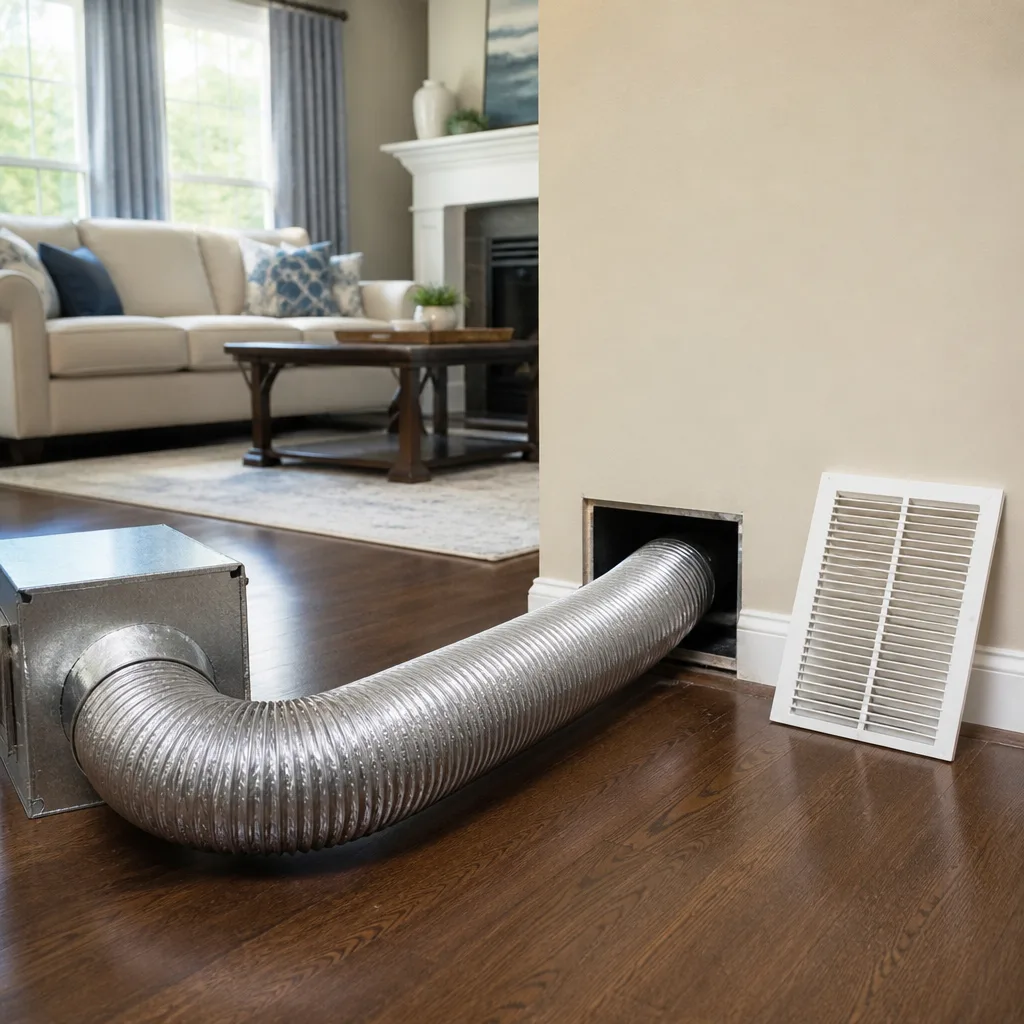 Whole-home duct cleaning
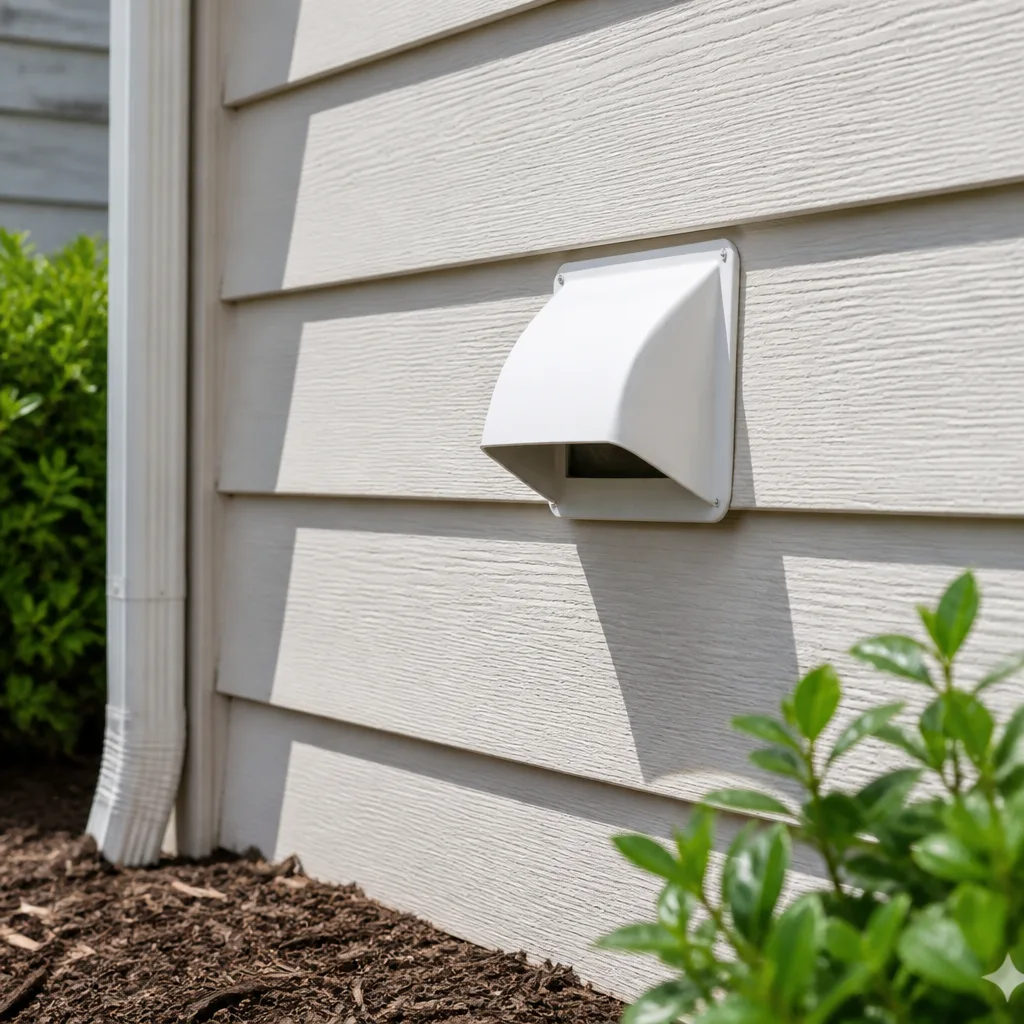 Dryer vent cleaning
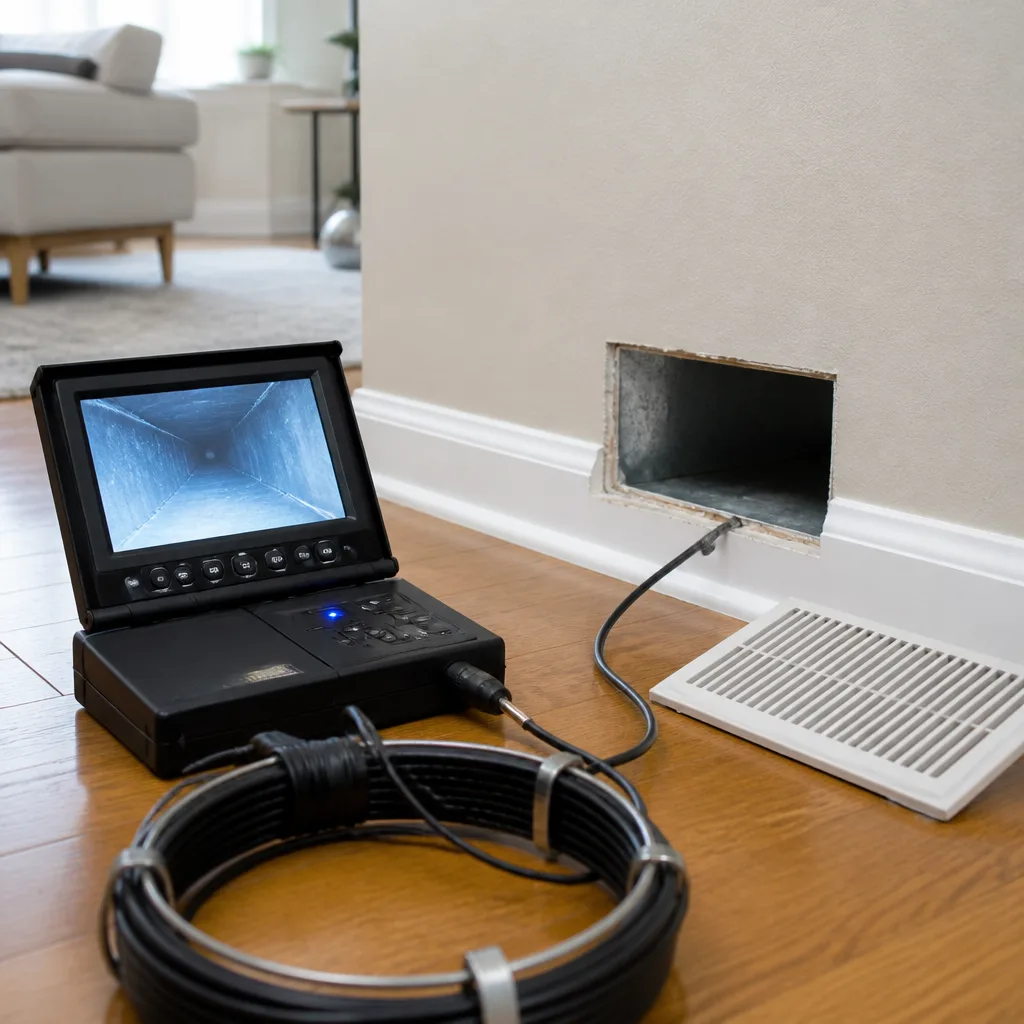 Camera inspection
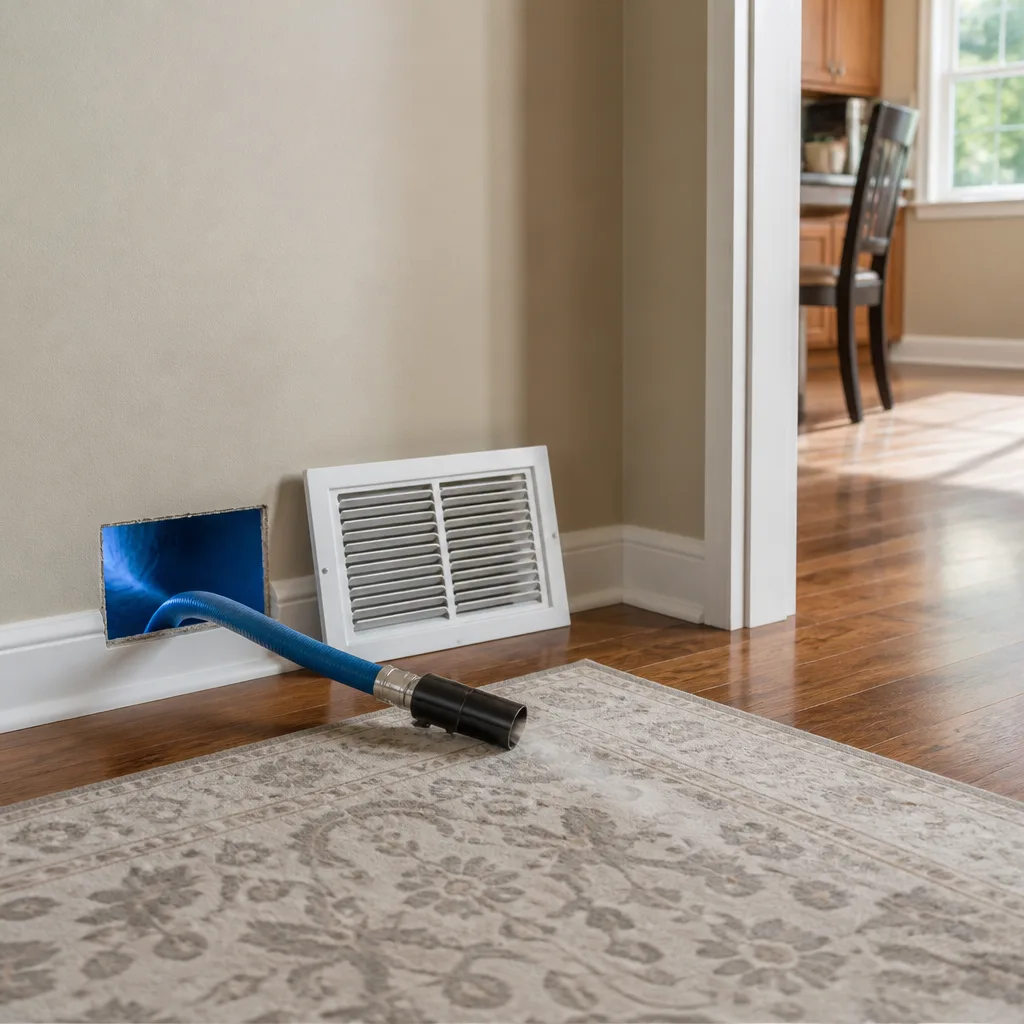 Sanitizing & deodorizing
Whole-system duct and dryer vent check with before-and-after photos - you see exactly what came out of your vents
That "$99 whole-house special" is a bait ad - the real number appears once they are in your hallway, or the "clean" is a shop-vac at the register. We photograph the inside of your ducts before and after instead.
Air Duct Cleaning Warning Signs: A Portland Homeowner’s Reference Guide
Most guides to duct problems point at the obvious: dusty vents, a filter that turns gray too fast, a faint smell when the heat kicks on. Those are real signals, but they show up late. By the time dust is visible on the register grilles, the material has usually been moving through the system for a long while. The earlier clues are quieter, and they’re location-specific. Uneven warmth between a bedroom and a bathroom, a musty note that only appears in one part of the house, a flex run in the crawlspace that sags a little more each year. In Portland’s older housing stock, these small symptoms tend to trace back to the duct system rather than the furnace. This guide walks through the warning signs room by room, separates the ones that call for cleaning from the ones that call for repair, and gives you a reference you can actually use.
Quick Answer
The main warning signs of a duct problem in Portland are uneven room temperatures, a musty or mold-like odor that appears in specific rooms, visible dust streaking around registers, sagging or disconnected flex duct in crawlspaces and basements, and a dryer that takes far longer to dry a load than it used to. Some of these point to a cleaning job. Others point to damaged ductwork that needs sealing or repair before cleaning will do any lasting good.
Styles & brands we work with
- Whole-home duct cleaning
- Dryer vent cleaning
- Camera inspection
- Sanitizing & deodorizing
Table of Contents
- Room-by-Room Warning Signs
- How to Tell Mold Odor From Ordinary Mustiness
- Warning Signs in Portland’s Older Housing Stock
- Dryer Vent Signs Homeowners Misread
- Cleaning vs. Repair: Which Does Your System Need?
- What a Proper Inspection Looks Like
- Common Mistakes to Avoid
- Frequently Asked Questions
Room-by-Room Warning Signs
Where a symptom appears tells you as much as the symptom itself. A duct system is a set of branches, and each branch feeds a specific room. When one branch is compromised, restricted, or disconnected, the room at the end of it behaves differently from the rest of the house. The pattern of rooms that misbehave is the first thing a technician reads.
Bedrooms
Bedrooms are usually the farthest points on the trunk line and often sit at the end of long flex runs. Cooler bedrooms than the rest of the house in winter, or a bedroom that never quite cools in summer while the hallway is fine, commonly point to a restricted or leaking branch serving that room. A bedroom that has its own persistent musty smell, especially one with a closet on an exterior wall, can point to a duct running through a damp zone uninsulated. Bedroom air quality matters most overnight, when the door is closed and air movement through the room depends entirely on supply and return balance.
Bathrooms
Bathrooms generate moisture, and the exhaust fan is what removes it. Duct problems in a bathroom usually trace to one of two things: a bath fan venting into the attic or crawlspace instead of outdoors, or a supply register placed too close to the shower, where constant humidity encourages condensation on the register and the duct behind it. If a bathroom register shows rust or peeling paint on its face, moisture is reaching it from somewhere. In Portland, where winter humidity hangs around for months, that pattern deserves attention.
Basements and Crawlspaces
Portland has a lot of partial basements and crawlspaces, and a great deal of ductwork runs through them. This is where the most serious problems hide, because nobody sits down there. Look for flex duct that has lost its support and sags between hangers, joints where the tape has let go and the two sections have separated, and any galvanized duct showing rust streaks along the seams. A disconnected joint in a crawlspace doesn’t announce itself with a symptom in the living space – it quietly sends conditioned air into the crawlspace instead of the house, and pulls crawlspace air back into the return.
How to Tell Mold Odor From Ordinary Mustiness
Not every musty smell in a house comes from ducts, and not every duct smell is mold. The distinction matters because the source location inside the system changes what the fix actually is.
Ordinary mustiness usually has an origin point: a damp basement that smells closed-up, a bathroom without a working fan, a load of laundry left in the machine. It fades when the source is addressed, and it tends to be diffuse, present throughout the house or concentrated in one humid area. Mold odor is sharper, more organic, and often appears or intensifies only when the system is running. If the smell shows up first thing in the morning when the heat cycles on, and drops back once the system has run a while, that pattern points at the ducts.
Where the odor comes from inside the system changes the approach:
- Odor strongest at one supply register: the growth is likely local to that branch, often where an uninsulated run crosses a cool, damp zone.
- Odor strongest at the return registers: the contamination is broad, and the return path itself is often pulling from a crawlspace or basement with its own moisture problem.
- Odor present in every room equally: the source is usually the air handler cabinet or the filter housing, not the branch ducts.
- Odor with visible dark staining on a register or nearby ceiling: moisture has been reaching that spot for a while, and the cause is usually a leak rather than condensation.
We can’t diagnose mold by smell, and we don’t test for it. What we can do is identify where the moisture is entering the system, clean the affected runs, and flag damaged ductwork that needs sealing so the moisture stops coming back. That’s the practical path. If you suspect a larger moisture problem in the building itself, a moisture or remediation specialist is the right call, and we’ll say so.
Warning Signs in Portland’s Older Housing Stock
A large share of Portland homes were built well before flex duct was standard, and many have been retrofitted over the decades with flex runs that weren’t originally part of the plan. That combination produces its own set of clues.
Sagging Flex Duct
Flex duct is supposed to run with gentle, fully supported curves. Over time, sagging between hangers collects debris and creates a low point where moisture can pool. A run that sags visibly is also a run that has lost effective diameter – the ridges press together and airflow drops. If you can see the ductwork in your basement or crawlspace and one run hangs noticeably lower than its neighbors, that branch is a candidate for inspection and likely replacement or re-support.
Galvanized Duct Corrosion
Older galvanized trunk lines and plenum connections show their age at the seams. Rust streaks, white powdery oxidation, and flaking along a joint are all signs that moisture has been present. In a Portland house with a damp basement, this is common enough. The corrosion itself is cosmetic until it perforates the seam, at which point the duct is leaking into the space around it. That’s what makes it worth checking.
Disconnected Crawlspace Joints
Crawlspace joints separate more often than you’d think. Vibration, age, and a careless footstep during some other repair will pull a taped joint apart. The living space symptom is a return that pulls crawlspace air, a room that never heats evenly, and, in some cases, a smell nobody can trace. It’s easy to fix once found, and nearly impossible to find from inside the house.
What Older Portland Homes Often Have in Common
- Original return ductwork sized for a much smaller system than the current furnace or heat pump.
- Multiple retrofits layered over each other, with joints sealed by whatever was on hand.
- Flex runs added later through unconditioned attic or crawlspace space, sometimes without insulation.
- Register boots that have pulled away from the drywall, letting air discharge into the wall cavity.
For a full account of what air air duct cleaning covers in a Portland home, our service page breaks down the equipment and the process.
Dryer Vent Signs Homeowners Misread
Most of the dryer vent warning signs get filed under appliance problems. A dryer that takes two cycles to dry a load gets blamed on an aging heating element. A dryer that feels warm to the touch gets blamed on the machine. In practice, a blocked vent produces exactly these symptoms, and the vent is the thing to check first. The NFPA lists lint buildup as a leading cause of residential fires, and a clogged dryer vent is one of the most fixable hazards in a home.
Signs that point at the vent rather than the appliance:
- Loads take longer than they used to. The drying time creeping up a minute at a time is the earliest sign. A load that used to finish in forty minutes and now needs seventy is a vent that’s restricted.
- The dryer body gets hot during a cycle. Heat that can’t exhaust builds up in the machine.
- A burning or smoky smell near the end of the cycle. Lint heating up against the exhaust path. Stop the cycle and treat it as urgent.
- The outside vent flap barely moves. With the dryer running, the exterior damper should open and hold open. If it stays still, airflow is poor.
- Lint collects behind the dryer or around the vent hood. Lint has to go somewhere. If it’s building up locally, it’s also building up inside the line.
- Clothes come out hot but still damp. The machine is doing its job; the exhaust isn’t.
If any of those match, the vent should be cleaned before the next load. Our dryer vent cleaning service handles that directly. The vent run in an average Portland home is longer than many homeowners assume, especially when the laundry sits in the middle of the house rather than against an exterior wall. Longer runs collect lint faster.
Cleaning vs. Repair: Which Does Your System Need?
The single most useful distinction in this guide is between a duct system that needs cleaning and one that needs repair. Cleaning without repair is a partial job on a system that will re-foul, and repair without cleaning leaves contamination in the newly sealed system. Most of the time, a proper job touches both. Getting the sequence right starts with an inspection.
Signs that cleaning is the main need:
- Dust is building up steadily on registers and in the return filter with no visible damage to the ducts.
- The system is intact but hasn’t been cleaned in a long time, and airflow is reduced throughout rather than in one room.
- Odors are diffuse and improve when the system is cleaned, with no obvious moisture entry point.
- A renovation, remodel, or animal intrusion has introduced debris into the system.
Signs that repair is the actual fix:
- One room runs consistently warmer or colder than the rest of the house and hasn’t responded to damper adjustments.
- You can see separated joints, torn flex, or crushed runs in basement or crawlspace.
- A register shows rust, or wall cavity around it feels damp.
- The return is pulling air from a crawlspace or basement rather than the living space.
- Supply boots have pulled away from the drywall, and air is escaping into the wall.
Air Duct Repair is one of our three core services as a standalone job, which is less common than you’d think. Many duct cleaners clean and move on; if the ducts are damaged, the clean does not last and the symptoms come back. We seal, patch, and restore ductwork, then clean it. The order matters. You can see the full range of what we do on the Steadfast Air Duct Cleaning home page.
What a Proper Inspection Looks Like
Warning signs tell you something is off. An inspection tells you where and why. If you’ve read this far and recognized your house, here’s what the process should look like when it’s done right.
- Visual walkthrough of the living space. Registers on, register conditions checked, thermostat settings and filter condition reviewed, behavior of each room noted.
- Access to the mechanical space. Basement, crawlspace, or attic where the ducts run. Joints checked for separation, sagging runs identified, corrosion noted.
- Camera inspection where needed. A small camera run into a trunk line or a suspect branch to see the interior condition.
- Return-side inspection. The return path is where most problems start and where contaminated air re-enters the home. It gets checked from the air handler back to the farthest return register.
- Dryer vent check. Pulled and inspected separately from the duct system, even when the homeowner called for duct cleaning alone.
- Written summary. What was found, what needs cleaning, what needs repair, and in what order. Piece by piece, in plain language, with before-and-after photos of your system.
What an inspection is not: a salesperson walking through with a clipboard and a coupon. The equipment matters at this stage. We use Rotobrush and Nikro systems, which are the same class of professional equipment used in commercial work, and Abatement Technologies filtration to contain and capture dislodged contaminants during cleaning. Those systems let a technician actually see what’s inside a run. A shop vac cannot.
See the difference
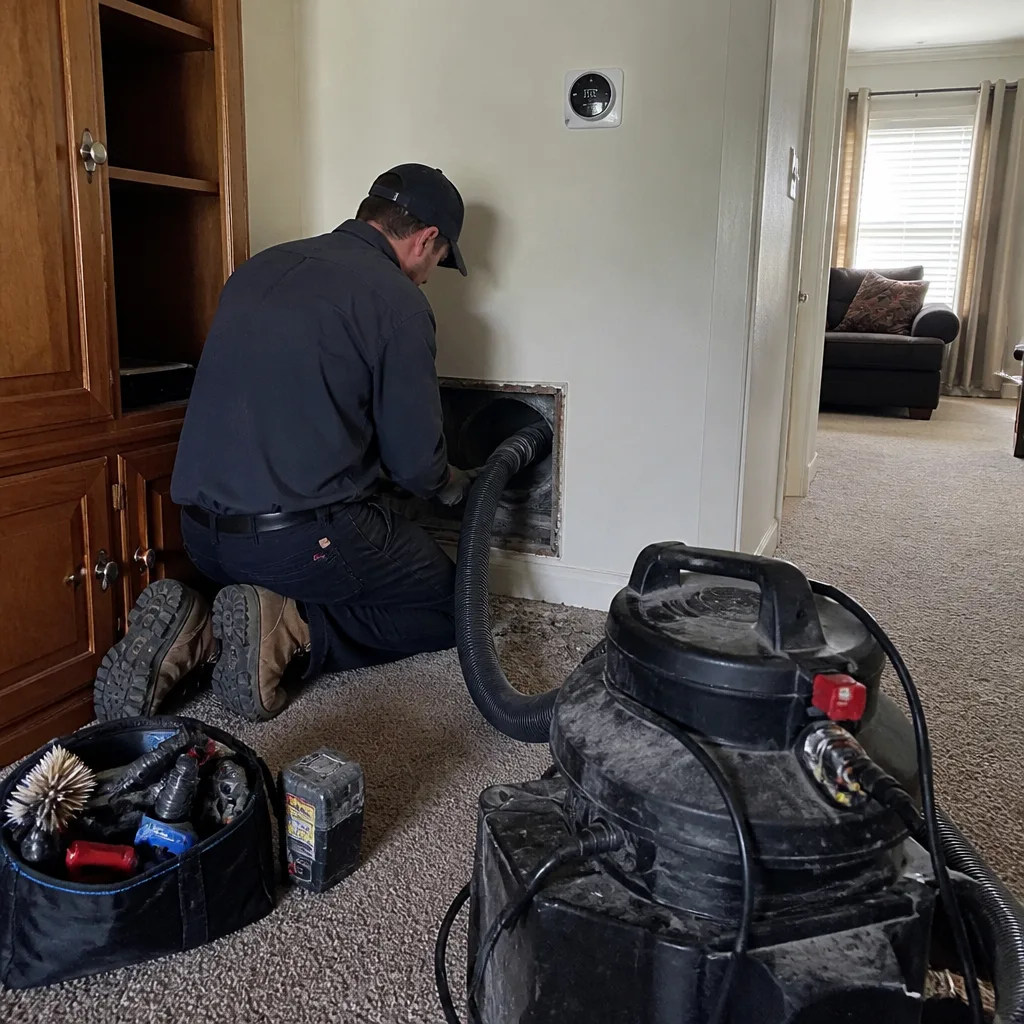 Before
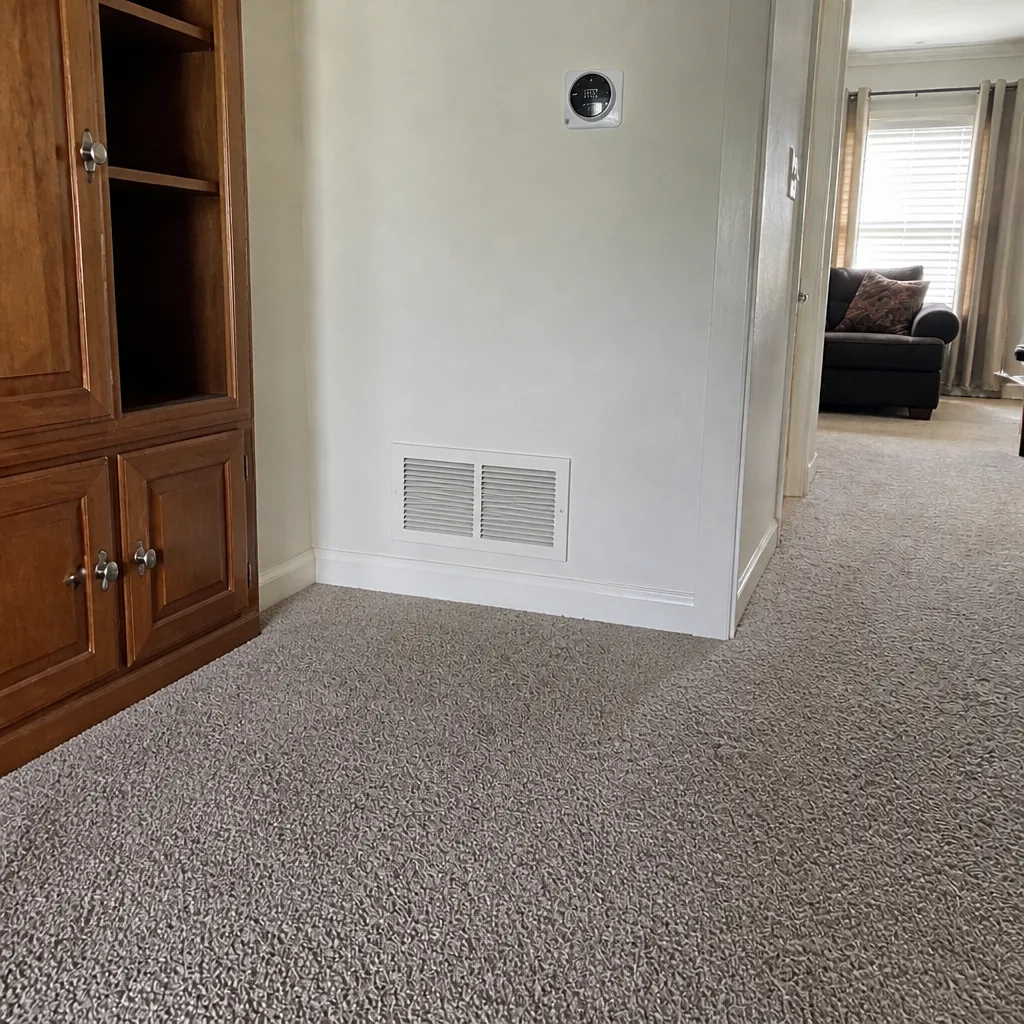 After
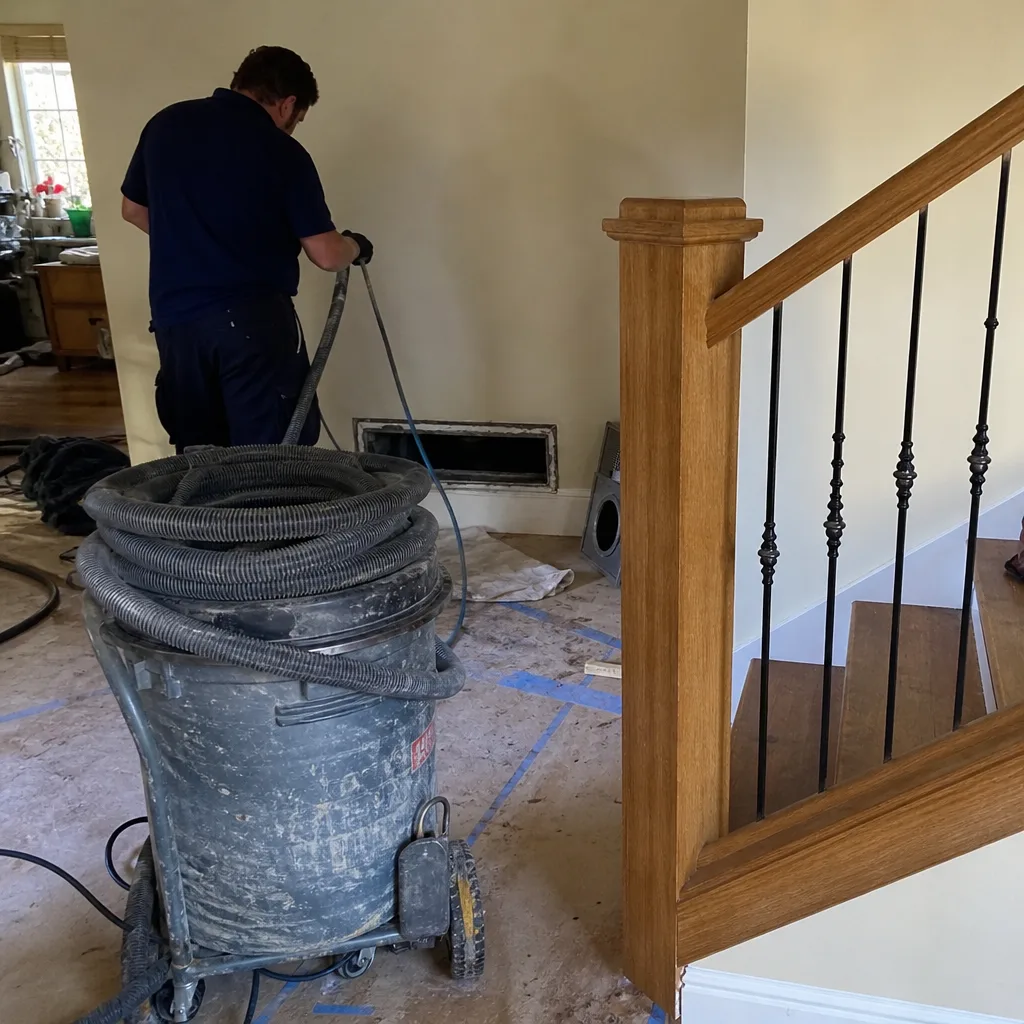 Before
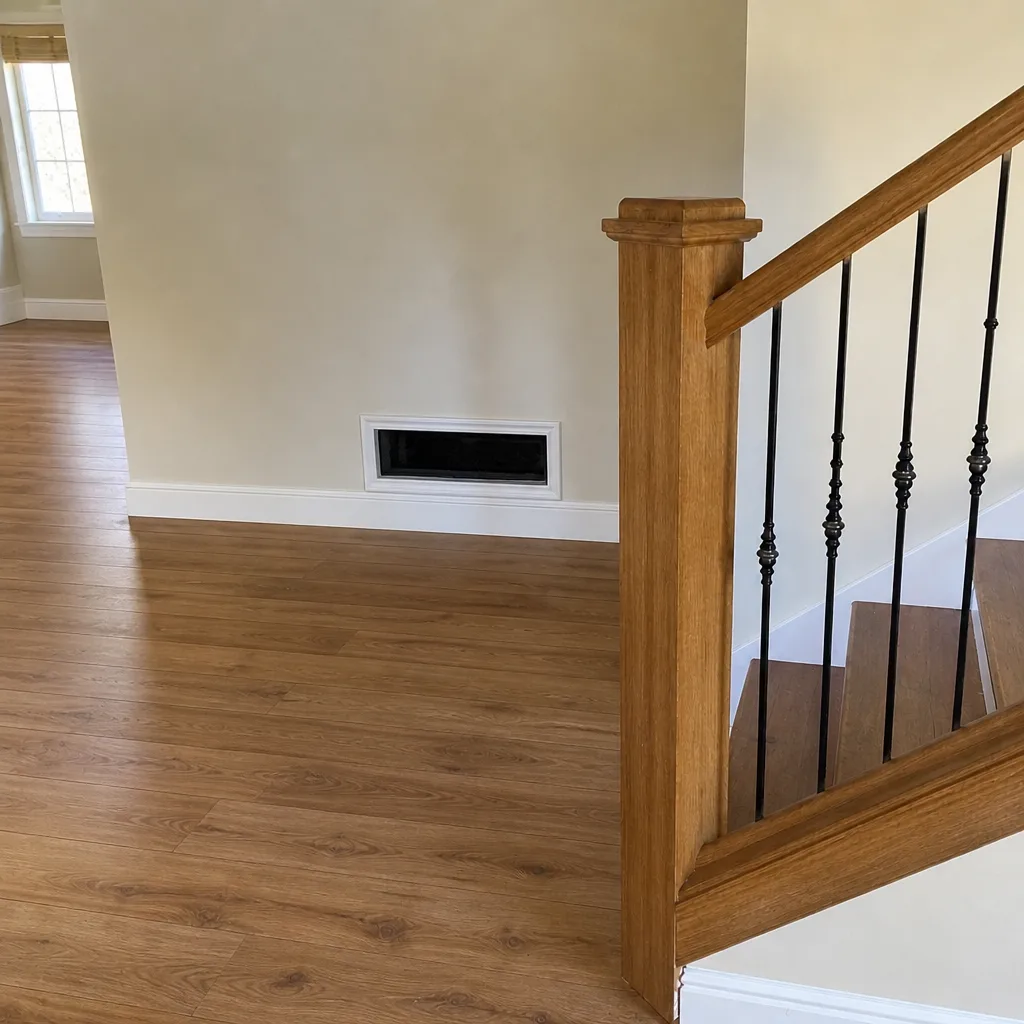 After
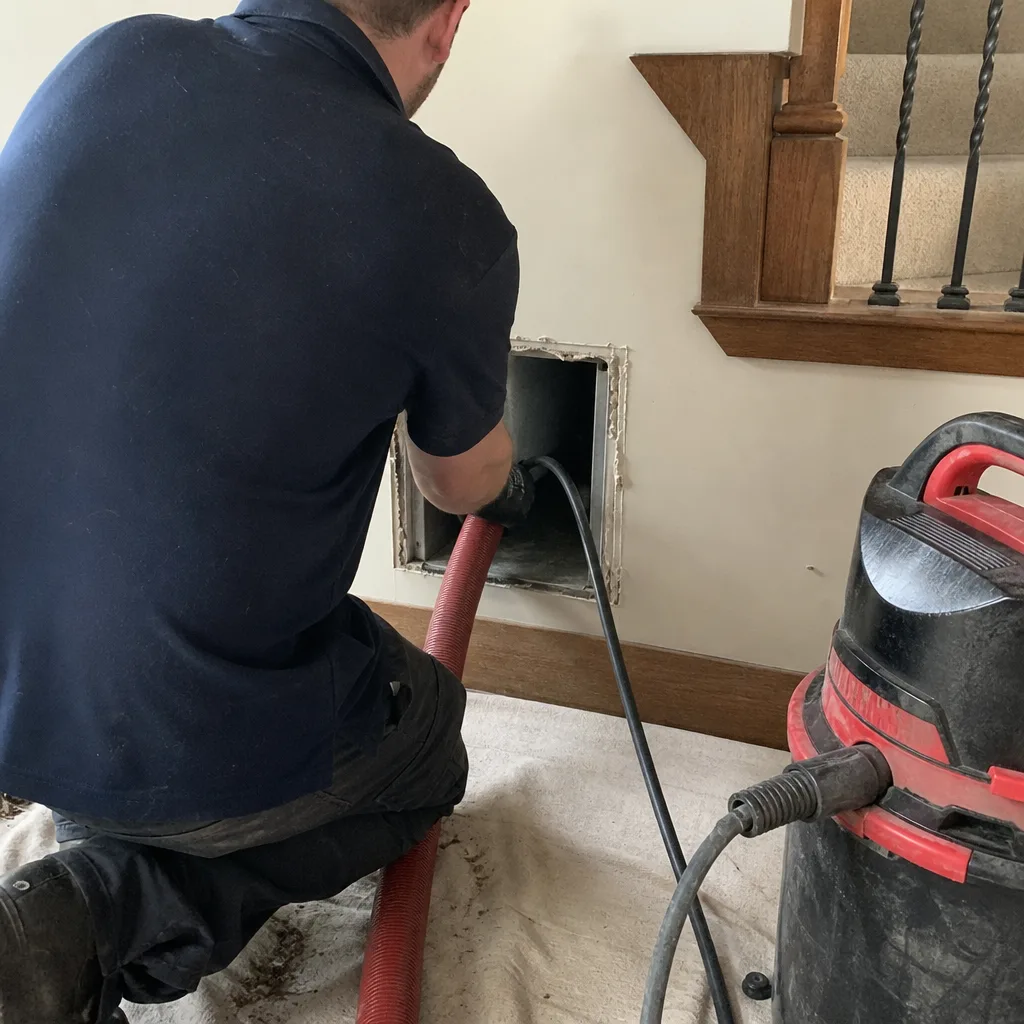 Before
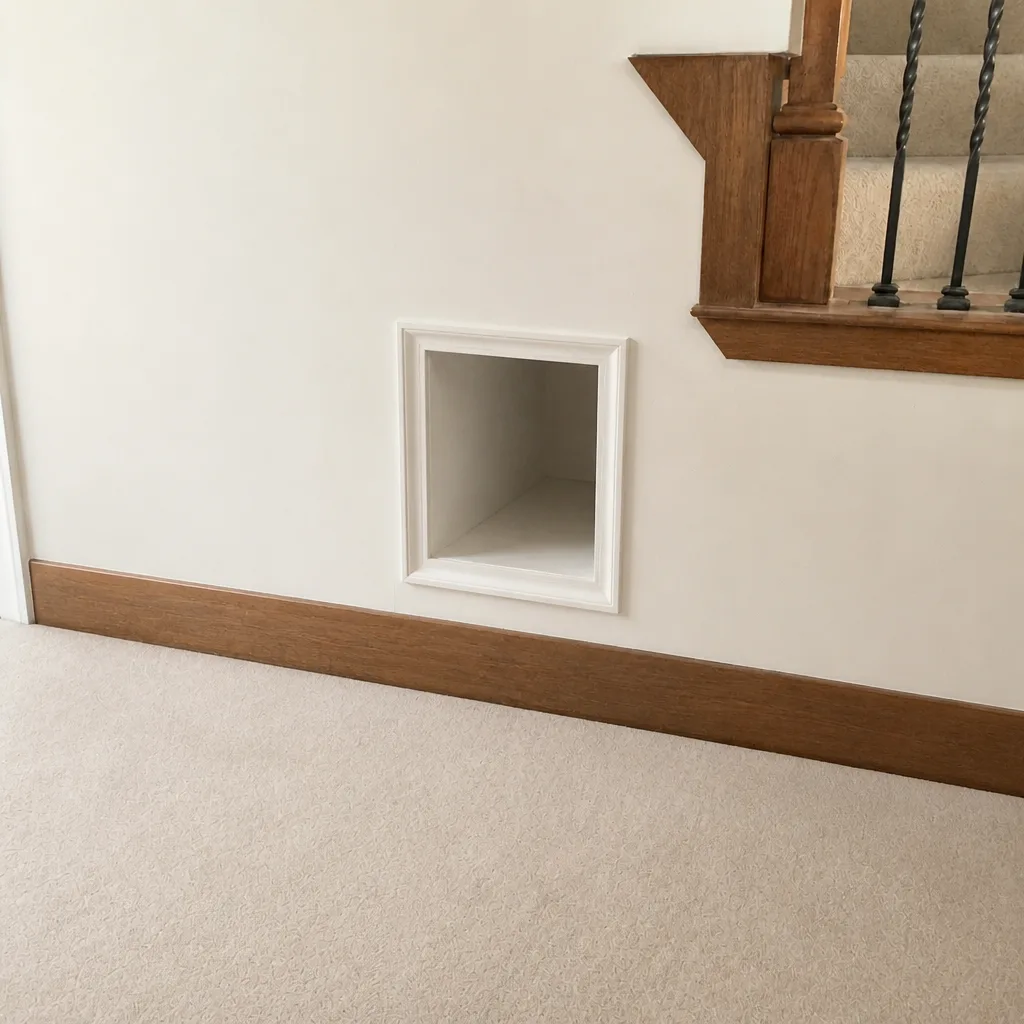 After
Common Mistakes to Avoid
- Assuming every duct problem is a cleaning problem. If a run is crushed, disconnected, or sagging, cleaning it doesn’t restore airflow. The repair has to come first, and any quote that skips the inspection and goes straight to a cleaning price is skipping a step.
- Fixing airflow by closing registers. Shutting off registers in the “cold” rooms to push air to the warm ones backfires. A closed register raises pressure in the system, pushes more air out of leaks, and worsens the imbalance. Diagnose the cause first.
- Waiting for the odor to clear on its own. A musty smell that appears only when the heat runs is not going to fade. It’s moisture in the system, and it will keep producing the smell until the source is addressed and the affected runs are cleaned.
- Treating the dryer vent as an appliance issue. Long dry times and a hot dryer body are vent signs, not heater-element signs. Cleaning the vent is cheaper than a service call on the machine, and it addresses the actual fire risk.
- Hiring whoever quotes the lowest price without asking about equipment. The phrase “professional duct cleaning” covers a wide range. Ask what equipment will be used, whether containment filtration is part of the job, and whether the technician will provide before-and-after photos of your own system. Those three questions separate the specialists from the blow-and-go outfits.
- Ignoring what you can see in the crawlspace. A quick look through the basement or crawlspace access is free. Rust streaks, sagging runs, and disconnected joints are visible to anyone, and documenting them before you call makes the estimate faster.
- Skipping the return side. Returns pull air from the living space back through the system. If the returns aren’t cleaned, the supply side gets contaminated again quickly. Any duct cleaning that doesn’t include the returns hasn’t cleaned the system.
When to Call a Professional
Some signs are good to note. Others are reasons to schedule an inspection now. Call a professional if you can see separated or crushed ductwork in the basement or crawlspace, if one room consistently runs more than a few degrees off the rest of the house and damper adjustments haven’t helped, if any register shows rust or its surrounding wall feels damp, if the dryer takes noticeably longer than it used to or its body gets hot, or if a musty smell appears only when the system is running. Those are the cases where the sequence matters, and a proper inspection is what makes the rest of the job go right.
Steadfast Air Duct Cleaning offers free estimates in Portland. Call (877) 957-0767. We answer 24/7. Fast dispatch from 7am to 7pm, Sunday through Friday. Our technicians have up to 8 years of experience, and every job is priced per system by the written estimate before any work starts, with before-and-after photos of your own ducts when we’re done.
Frequently Asked Questions
A consistent, room-specific temperature problem that doesn’t respond to thermostat or damper adjustments is the most reliable single sign. Diffuse dust on every register could be a housekeeping issue or a filter issue. One room that always runs cooler or warmer than the rest is a duct branch problem, and it’s worth inspecting before anything else. Call (877) 957-0767 for a free estimate.
If the smell appears or gets stronger only when the heat or AC is running, it’s likely coming through the ducts. If it’s present all the time in one part of the house, the source is more likely the room itself. Either way, the return side is worth checking. If the return pulls from a crawlspace with its own moisture problem, the smell is entering the system there.
Sometimes yes, often no. Cleaning restores airflow when buildup is the restriction. If the cause is a crushed, sagging, or disconnected duct, cleaning alone won’t fix it and repair is the actual fix. An inspection tells you which you’re dealing with before you spend money on either. Call (877) 957-0767 for a free estimate.
Most homes don’t need duct cleaning on a strict schedule. The right trigger is a visible warning sign or a change in behavior, such as a remodel, animal intrusion, water damage, or a room that has stopped heating evenly. If none of those apply and the system is otherwise healthy, a cleaning every several years is reasonable. A yearly inspection is cheaper than guessing.
Yes. Lint is highly combustible, and a blocked vent gives it a place to accumulate next to the heat source. Long dry times, a hot dryer body, and a smoky smell near the end of a cycle are all vent signs, not appliance signs. Cleaning the vent is a fire-safety task. Call (877) 957-0767 to schedule one.
Ask three things: what equipment they use, whether containment filtration is part of the job, and whether they’ll provide before-and-after photos of your own system. A professional operation will answer all three clearly, and will also tell you when a duct problem is a repair rather than a cleaning. We use Rotobrush and Nikro systems and Abatement Technologies filtration on every job, and Air Duct Repair is one of our three core services. Call (877) 957-0767 for a free estimate.
The Bottom Line
The warning signs of a duct problem are quieter than most guides suggest, and in Portland they show up differently depending on where in the house you look. A cold bedroom, a damp bathroom register, a sagging flex run in the crawlspace, a dryer that takes an extra cycle. Read the pattern, not the single symptom. Distinguish between a system that needs cleaning and one that needs repair, because the wrong fix doesn’t fix anything. And when the signs point clearly enough to schedule an inspection, get one that includes equipment names, containment, and before-and-after photos of your own ducts. Those are the marks of a job done right. When you’re ready to schedule, call (877) 957-0767 for a free estimate in Portland.
We work with Honeywell and Aprilaire whole-home systems where they’re installed, so we can read the duct system in the context of the rest of your air quality equipment rather than treating it in isolation.
Written by the team at Steadfast Air Duct Cleaning.