
Last updated November 15, 2026
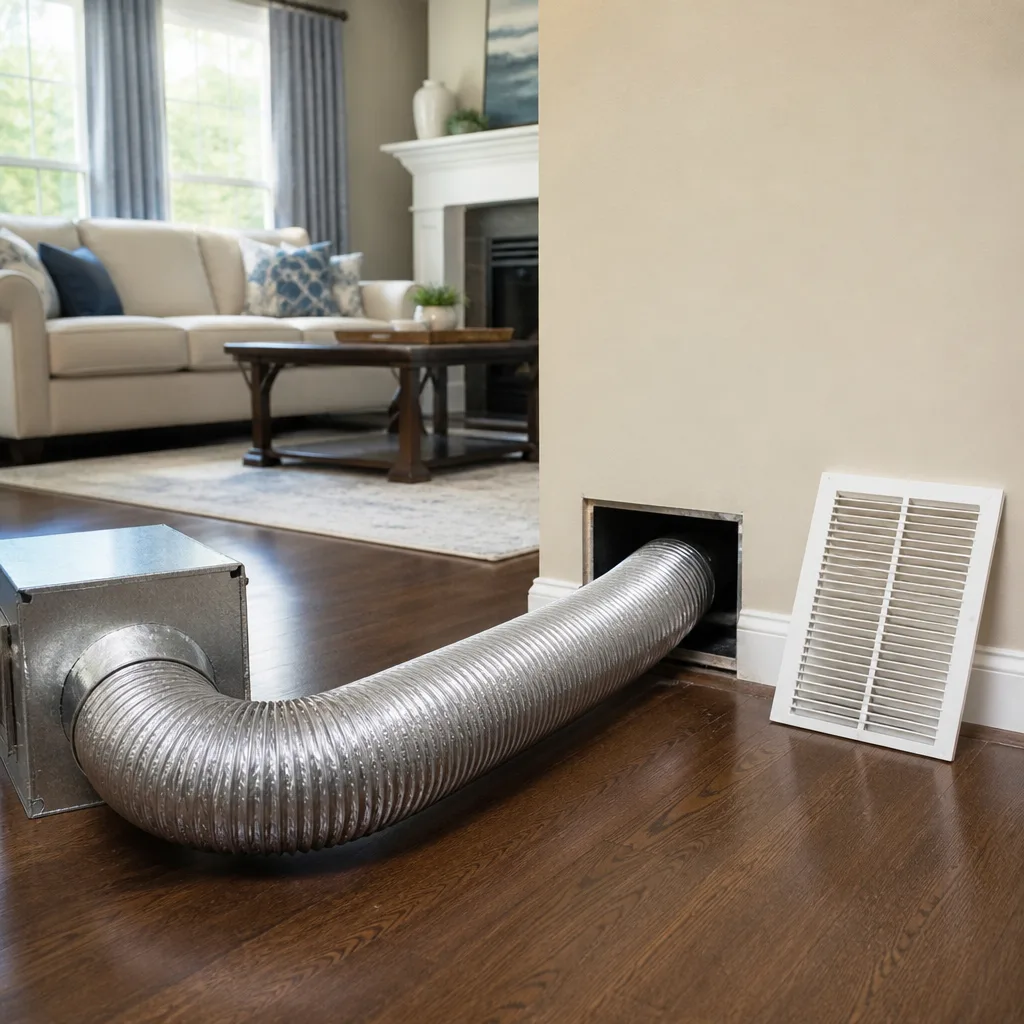 Whole-home duct cleaning
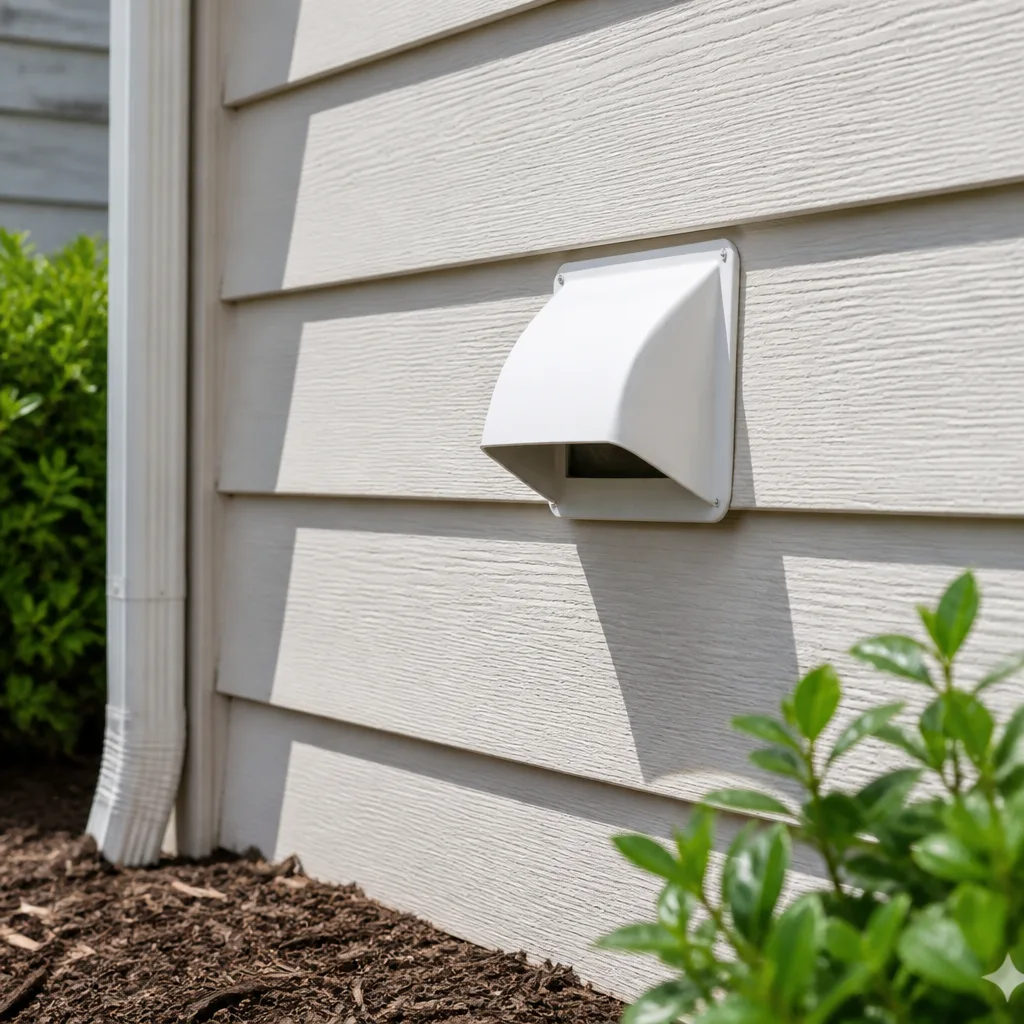 Dryer vent cleaning
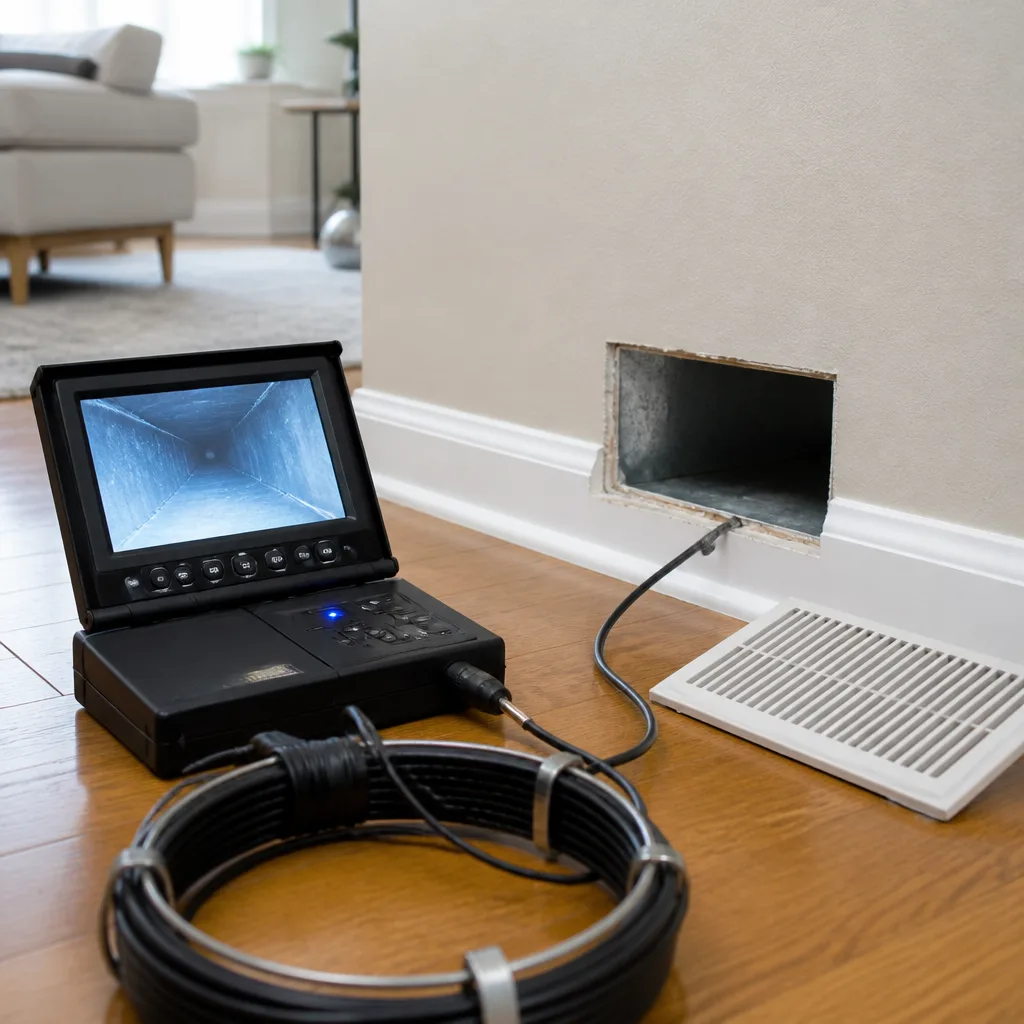 Camera inspection
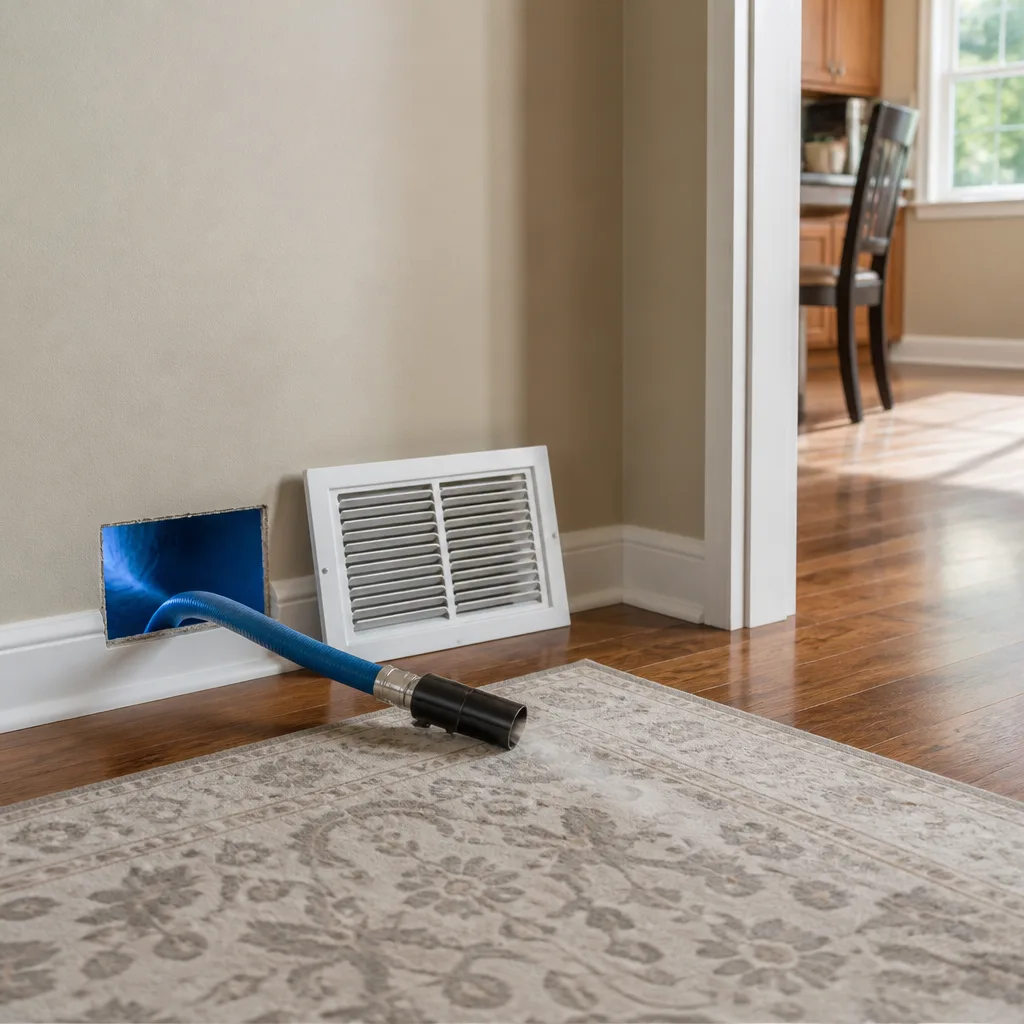 Sanitizing & deodorizing
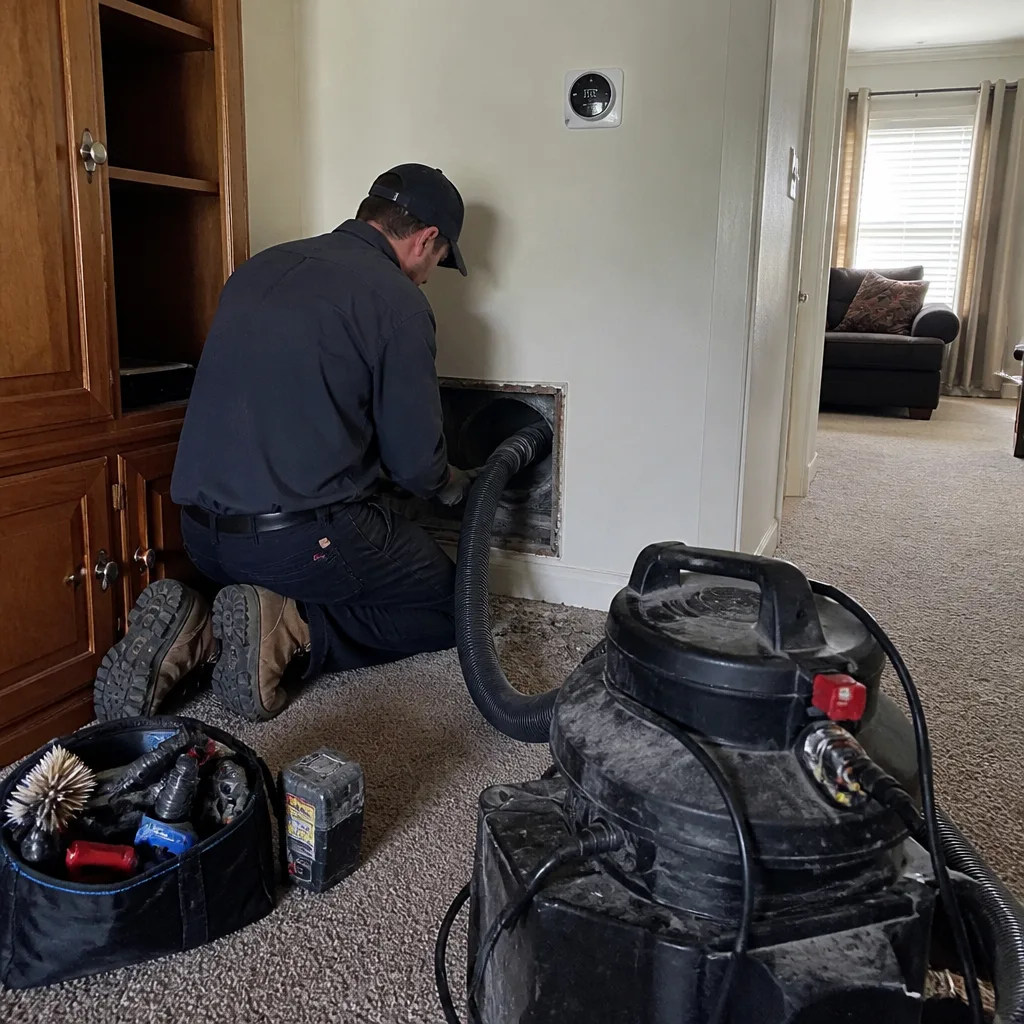
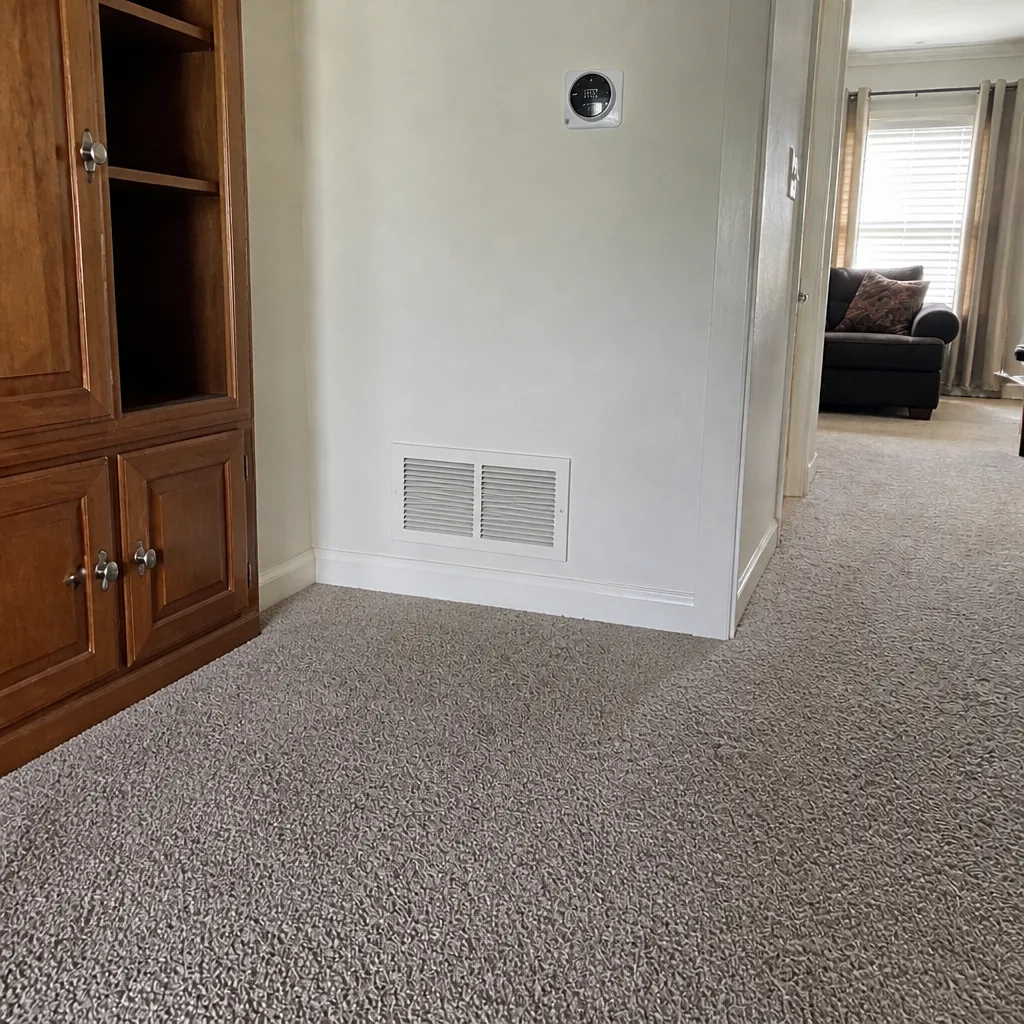
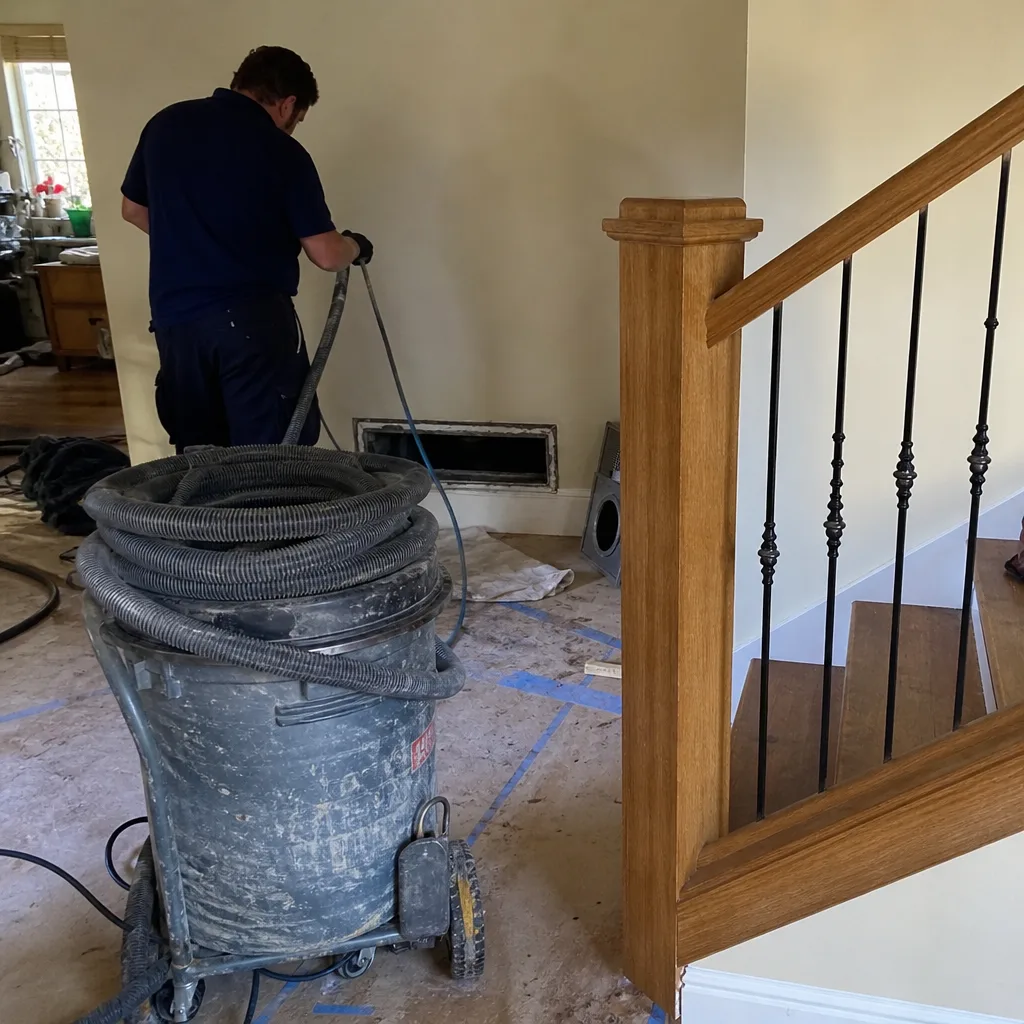
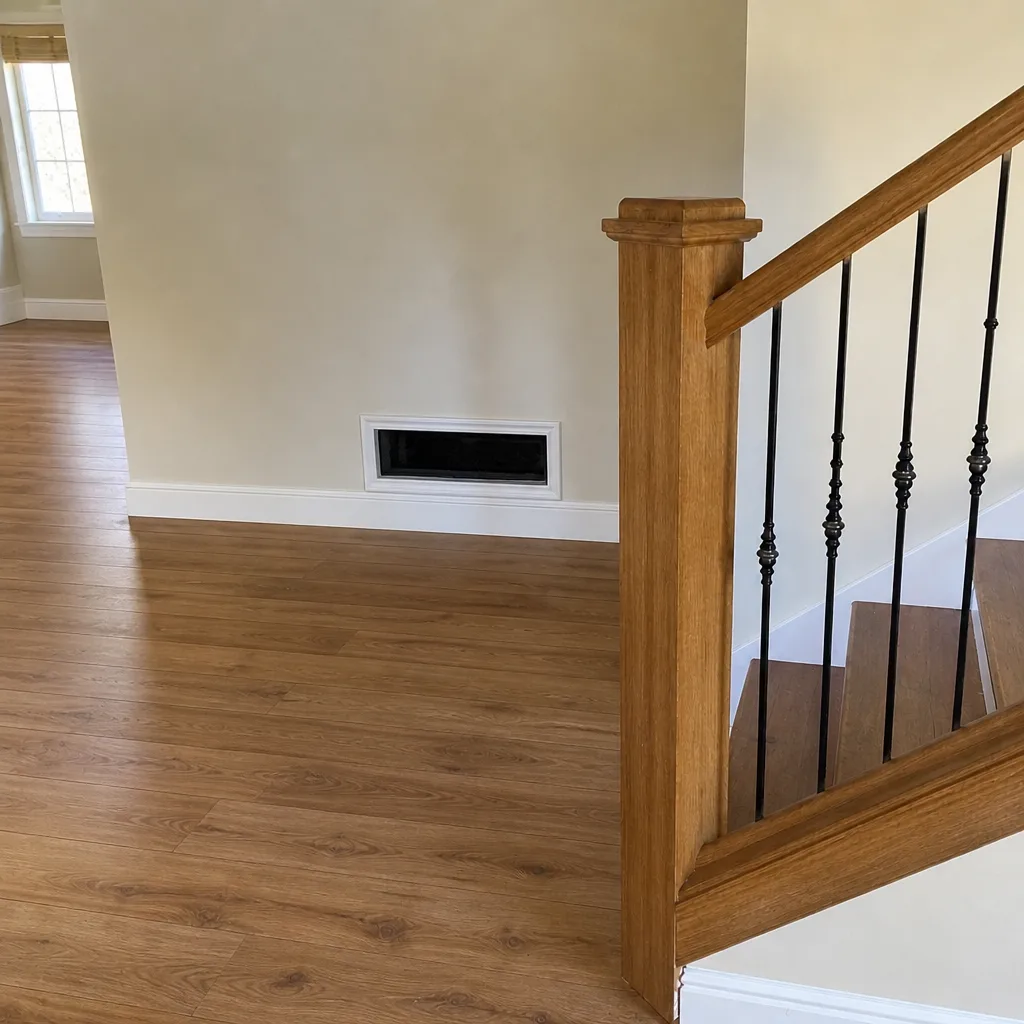
Whole-system duct and dryer vent check with before-and-after photos - you see exactly what came out of your vents
That "$99 whole-house special" is a bait ad - the real number appears once they are in your hallway, or the "clean" is a shop-vac at the register. We photograph the inside of your ducts before and after instead.
Choosing the Right Air Duct Cleaning Brand: A Buyer’s Guide for Portland
Most homeowners judge a duct cleaning company by the quote and the review score. That’s backwards. The single most diagnostic question you can ask a contractor in Portland is simpler: what equipment do you use? A contractor who can explain the difference between their vacuum system’s airflow capacity and a shop vac has just told you more about their capability than any rating ever could. A contractor who can’t, has told you everything too. This guide shows you how professional duct cleaning equipment actually works, why Rotobrush, Nikro, and Abatement Technologies aren’t interchangeable, and how to verify what’s really being rolled into your driveway.
Quick Answer
The right air duct cleaning brand in Portland is the one that brings professional-grade equipment matched to your system: an agitation tool like Rotobrush to loosen debris, a high-airflow negative-pressure machine like Nikro to pull it out, and HEPA filtration like Abatement Technologies to capture what’s dislodged. Brands matter only when the contractor can explain why each tool suits your ductwork and contamination level. Ask about equipment first, price second.
Styles & brands we work with
- Whole-home duct cleaning
- Dryer vent cleaning
- Camera inspection
- Sanitizing & deodorizing
Table of Contents
- Why equipment is the question that matters most
- Rotobrush: brush-and-vacuum in one pass
- Nikro and negative-pressure extraction: when airflow beats brand
- Abatement Technologies: filtration built for contamination
- How to verify a contractor’s equipment is really professional grade
- The three-part equipment combination a full-system clean should use
- Portland ductwork realities: crawlspaces, older homes, wet winters
- Questions to ask before you hire
Why equipment is the question that matters most
Air duct cleaning has a low barrier to entry. A van, a shop vac, and a brush can be marketed as “professional service,” and the invoice won’t tell you the difference. The equipment does. As a dedicated indoor-air specialist, Steadfast Air Duct Cleaning has watched this play out across the Portland market for years, and the pattern is consistent: the contractors who can name their tools and explain the engineering behind them are the ones doing the work completely.
Airflow capacity, brush design, and filtration are the three variables that decide whether a clean actually removes debris or just stirs it into your living room. A consumer shop vac might pull roughly 100 to 200 cubic feet per minute at the hose. Professional duct cleaning systems are rated to move far more air while maintaining pressure at the far end of a long run, which is the difference between agitating surface dust and evacuating loosened debris from inside the duct.
In Portland, this matters because duct runs here aren’t uniform. A 1920s bungalow in Sellwood with short, wide ducts and a basement system behaves differently from a 1990s build in Hillsboro with long, narrow runs and a crawlspace plenum. The equipment has to suit what’s actually installed. That’s why we lead with the equipment question and let price follow.
- Agitation: mechanical action loosens debris bonded to duct walls
- Negative pressure: the system must pull that debris toward the collection point, not into rooms
- Filtration: the exhaust air needs HEPA-grade capture so dislodged particles leave the building
- Access: the right tool can reach short runs, tall boots, and crawlspace installs without damaging ductwork
Rotobrush: brush-and-vacuum in one pass
A Rotobrush system combines the brushing mechanism with the vacuum hose in a single assembly, so the brush agitates debris off the duct wall at the same moment the vacuum pulls it back toward the machine. That simultaneous action is the whole point. When agitation and extraction happen sequentially, which is what a brush-on-a-stick and a shop vac force you to do, the loosened debris settles again before you ever get vacuum suction to it.
The Rotobrush design is especially useful on the fan-shaped, flat rectangular trunk lines common in older Portland homes. Reaching those surfaces with a brush in one hand and a hose in the other is awkward and often incomplete. Because the brush and vacuum travel together, the technician covers more wall surface with more consistent pressure, and the machine’s collection canister shows you how much material came out.
That last point matters for another reason. When a Rotobrush job is done, you can see what was collected. Ask the technician to show you the canister before they empty it, and ask for before-and-after photos of your own system, not stock images. That’s not a small thing. It’s the difference between a contractor who expects to be verified and one who expects to be trusted.
Rotobrush alone doesn’t handle every job. It’s a source-side agitation tool, not a whole-system negative-pressure solution, which is why professional work pairs it with a second machine. We’ll get to that combination below.
Nikro and negative-pressure extraction: when airflow beats brand
Truck-mounted duct vacuums are the traditional standard for negative-pressure extraction, and they’re excellent when the duct system is accessible and the layout supports them. In Portland, plenty of installations don’t. Crawlspace duct trunks, tight attic runs, and historic homes with low-clearance basements are common, and a truck unit parked on the street can’t always reach those zones effectively.
That’s where portable negative-air machines like Nikro enter the picture. A Nikro system is a self-contained negative-pressure machine built to create and maintain suction across a duct system when a truck-mounted unit isn’t practical. Here’s the trap: many homeowners assume truck-mounted always beats portable. In real duct work, the number that matters more than “truck” or “portable” is the machine’s rated airflow capacity (CFM) and the pressure it holds at the working end. A well-rated portable unit on a difficult layout outperforms a truck unit that has to run 80 feet of hose and lose pressure before it reaches the duct.
The practical takeaway: ask what CFM the machine is rated for, and ask how the technician plans to keep negative pressure at the far end of your longest duct run. A contractor who can answer that with specifics has the right equipment. A contractor who answers with a brand name and a shrug does not.
- Ask: “What CFM is your extraction machine rated for, and how do you maintain pressure across long runs?”
- Ask: “Will you use a truck-mounted or portable unit for my duct layout, and why?”
- Watch: the machine’s rated specs on the housing, not the marketing sticker on the van
- Note: whether negative pressure is maintained continuously during agitation
Abatement Technologies: filtration built for contamination
Abatement Technologies equipment was originally engineered for the remediation industry, work that demands strict containment of fine particulates during asbestos and mold projects. That engineering standard is directly relevant to duct cleaning in two ways: the equipment is built to capture fine particles at HEPA efficiency, and the machines are designed to hold that capture continuously while work is happening, not as an add-on after the fact.
Every duct clean dislodges something. Debris bonded to duct walls, settled dust in boot fittings, lint accumulation in returns, and whatever has collected in the plenum over years. Without HEPA filtration on the exhaust side, some of that loosened material gets pushed back into the living space. That recirculation is what makes a poorly executed duct clean feel like the house got dirtier during the job than before it.
We deploy Abatement Technologies air filtration equipment on every job for that reason. The filter is on the exhaust, which means particles that get dislodged during agitation are captured at the machine rather than redistributed through the house. For health-conscious homeowners and allergy sufferers, the distinction between contained and recirculated is the entire value of professional cleaning. In Portland’s wet-winter months, when the house is closed up and air changes are low, recirculating dislodged debris is the last thing you want.
Honeywell and Aprilaire whole-home air quality systems often operate alongside ductwork we clean, and we’re familiar with both. Knowing what’s installed on the equipment side helps a technician contextualize duct findings within the broader air-quality picture.
How to verify a contractor’s equipment is really professional grade
Any contractor can say they use “professional equipment.” Verifying it takes a few questions and a couple of on-site observations. Here’s a workable process for a Portland homeowner before signing anything.
- Ask for the equipment names in writing on the estimate. If the contractor can’t or won’t name the machine brands and models, that’s an answer in itself. Rotobrush, Nikro, and Abatement Technologies are named because they’re distinguishable in the field.
- Ask what each machine does in the job. A real professional separates agitation, extraction, and filtration in their answer. A shortcut contractor will list machines like a package deal and not explain the role of each.
- Ask for the CFM rating of the extraction unit. The answer tells you whether they’ve been asked this before. It’s the same question a commercial client asks.
- Ask how HEPA filtration is handled on the exhaust. If there’s no clear answer about exhaust capture, the dislodged debris has somewhere to go, and it isn’t the collection canister.
- Watch for rebranded consumer units. Some “professional” setups are shop vacs with a custom housing or a generic canister with a new logo. Look at the machine’s data plate and confirm the manufacturer’s name matches what’s being claimed.
- Ask to see before-and-after photos of the previous job. A contractor who has documentation ready is a contractor who expects to be checked. Ask that the photos be of your own system when the job is done.
On-site, look at what actually shows up. Professional machines are bulky, often on casters, and run on their own power with their own onboard filtration. A van with nothing but a shop vac and a brush roll does not add up to a full-system clean. As a dedicated indoor-air specialist, we think the questions above should be routine. Use them with anyone you consider.
The three-part equipment combination a full-system clean should use
A complete clean uses three functions in sequence: agitation to break debris loose, negative-pressure extraction to pull it out of the system, and HEPA filtration on the exhaust to keep what’s been loosened contained. A single machine rarely does all three well, which is why the industry’s professional systems are modular.
- Agitation with a Rotobrush or equivalent. The brush-and-vacuum design loosens surface debris in the branches and trunk lines, reaching duct wall surfaces that loose airflow can’t lift.
- Negative-pressure extraction with a Nikro portable or truck-mounted unit. With the system under negative pressure, loosened debris travels toward the collection point. CFM and pressure ratings matter more than the type of unit for most residential layouts.
- HEPA filtration with Abatement Technologies equipment on the exhaust. The dislodged particles that make it as far as the machine are captured at HEPA efficiency rather than recirculated back into your home.
- Repair and reseal as needed. Professional duct cleaning also surfaces problems: torn flex duct, disconnected runs, or leaks in the trunk. We offer air duct repair as a standalone service because cleaning a system with compromised ductwork and not fixing it leaves the problem in place.
If a contractor quotes a full-system clean but can only describe one machine in the van, you’re looking at a partial job. The equipment has to cover all three functions or the clean is incomplete on the extraction or filtration side. Every job we run uses the three-function combination, and we can walk through what each machine is doing on yours.
Portland ductwork realities: crawlspaces, older homes, wet winters
Portland ductwork is unusually varied, and a lot of it is the product of the housing stock and the climate. Here’s what we see that matters for equipment selection.
Crawlspace and basement systems. Many Portland homes run duct trunks through crawlspaces or basements rather than attics. Those layouts are harder to pressurize from a parked truck, which is why portable negative-air units like Nikro are frequently the right call here. A contractor who only owns one truck-mounted machine will work around the limitation, not through it.
Historic homes and low-clearance layouts. Homes in neighborhoods like Sellwood, Irvington, and Laurelhurst frequently have duct layouts that no modern installer would design. Short runs, unusual boot placements, and tight clearances mean access and agitation tools need to be adaptable. Rotobrush systems excel where the technician can guide the brush head precisely, and the brush type matters as much as the machine.
Wet winters and closed-house months. Portland’s wet winter months mean the house stays closed more of the year than in drier climates. Low air exchange concentrates whatever is in the system, and it makes HEPA filtration during the clean more important, not less. In our experience, the homes here that benefit most from a full-system clean are often the ones that feel stuffiest in January.
Dryer vent cleaning is a separate, critical job. The NFPA has documented lint buildup in dryer vents as a leading cause of residential fires, and Portland’s older homes often have vent runs that were never designed with lint management in mind. Professional dryer vent cleaning is a fire-safety service, not a luxury add-on. Inquire about it explicitly; some duct cleaners who list it treat it as an afterthought, and a specialist will explain exactly how lint is removed and how flow is verified.
Air duct cleaning in Portland is a routine service for households dealing with allergy symptoms or visible dust accumulation, and the same equipment principles apply to both residential and light-commercial work. For more on what duct cleaning involves, see air duct cleaning.
Questions to ask before you hire
These are the questions that separate a professional clean from a quick pass. Use them as a script, and treat evasiveness on any one of them as a signal.
- “What specific equipment brands and models will you use?” A professional can name Rotobrush, Nikro, and Abatement Technologies or equivalents without hesitation and explain why each is matched to your layout.
- “What CFM is the extraction unit rated for?” Expect a figure and a short explanation of pressure hold across your longest run, not a brand name alone.
- “How is HEPA filtration handled on the exhaust?” If they can’t tell you, dislodged particles are going somewhere they shouldn’t.
- “Will you provide before-and-after photos of my own system?” Documentation is table stakes. Every job we do includes photos of the specific ductwork we cleaned.
- “Is the price per system, or per vent?” Per-vent pricing is how a low initial quote turns into a surprise invoice. We quote one flat price per system, set before work starts.
- “Do you also handle air duct repair if you find damage?” Cleaning compromised ductwork without addressing it isn’t a complete job. We offer duct repair as a standalone service for that reason.
- “Are you licensed and insured?” Confirm this in writing. Ask for a certificate of insurance; every professional should have one on request.
- “What’s the written estimate?” The written estimate sets the final price. If a contractor won’t put numbers in writing before starting, treat it as a red flag.
Portland has a strong market of duct cleaning companies, and the range of quality is wide. These questions level the field.
Common Mistakes to Avoid
- Hiring on the lowest quote without asking what equipment shows up. A cheap quote is often a shop vac and a brush roll, and the difference in outcome is exactly what the quote reveals. Ask the equipment question first, then compare price among contractors who pass it.
- Accepting per-vent pricing as standard. A per-vent model rewards a technician for opening as many vents as possible regardless of how much debris each contains, and it also encourages a low teaser figure that grows as vents are counted. One flat price per system, set before work begins, is the model that protects the homeowner.
- Not asking about exhaust filtration. Without HEPA filtration on the exhaust, agitation pushes loosened debris into the living space. In Portland houses with closed-winter layouts, that recirculation is noticeable and wrong.
- Letting a contractor clean an unknown-airflow system. Older Portland homes sometimes have disconnected or crushed duct runs that the technician only discovers mid-job. Ask whether inspection happens first and how duct repair is handled if damage is found.
- Treating dryer vent cleaning as an optional add-on. Lint buildup in dryer vents is a documented fire risk, and a thorough dryer vent service is a separate job with its own tools. If it’s only offered as an afterthought, get it done by someone who treats it as a service of its own.
- Not asking for photos of your own ducts. Generic “before and after” stock images don’t verify the work. Ask for photos of your specific ductwork, and ask to see the machine collection points before they’re emptied.
- Assuming brand-new ductwork doesn’t need checking. Construction debris, drywall dust, and shipping debris commonly end up inside ductwork during a remodel. A system that’s new to the house isn’t the same as clean.
See the difference
 Before
 After
 Before
 After
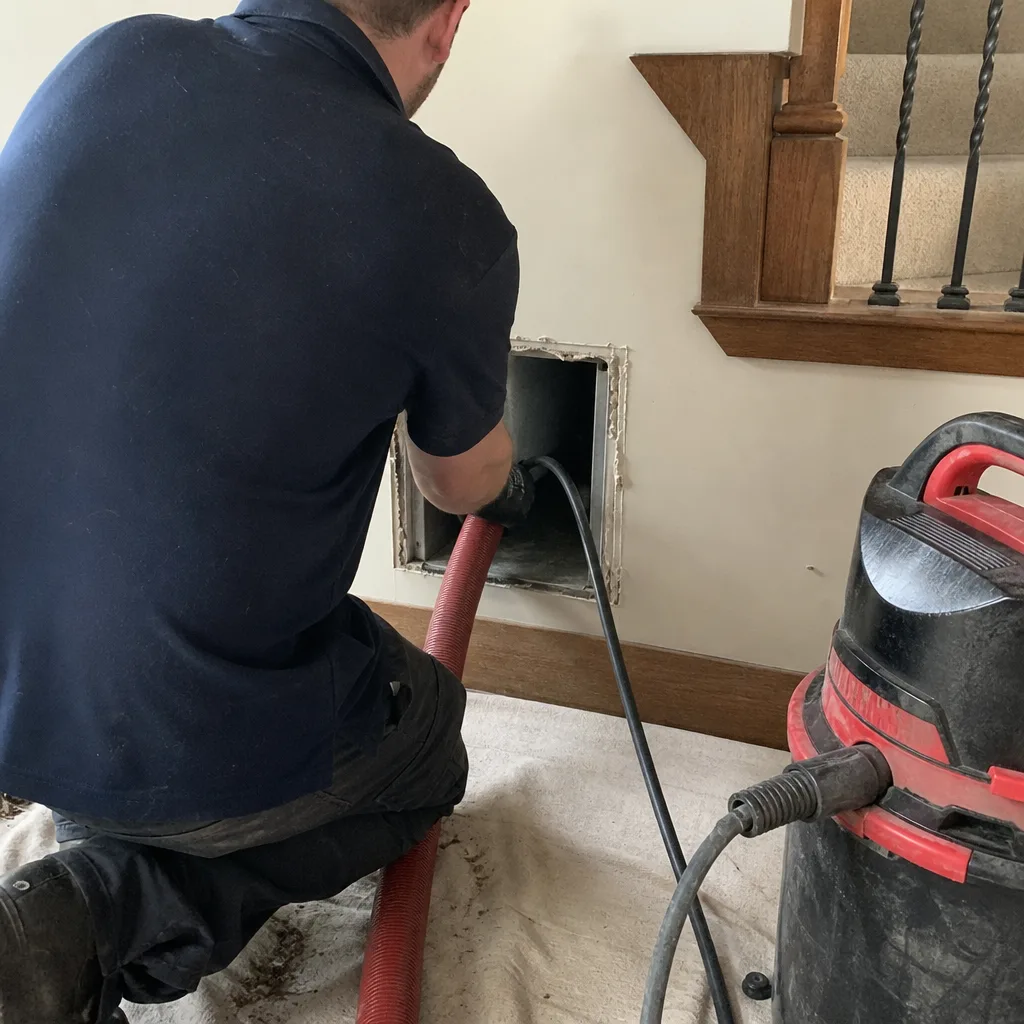 Before
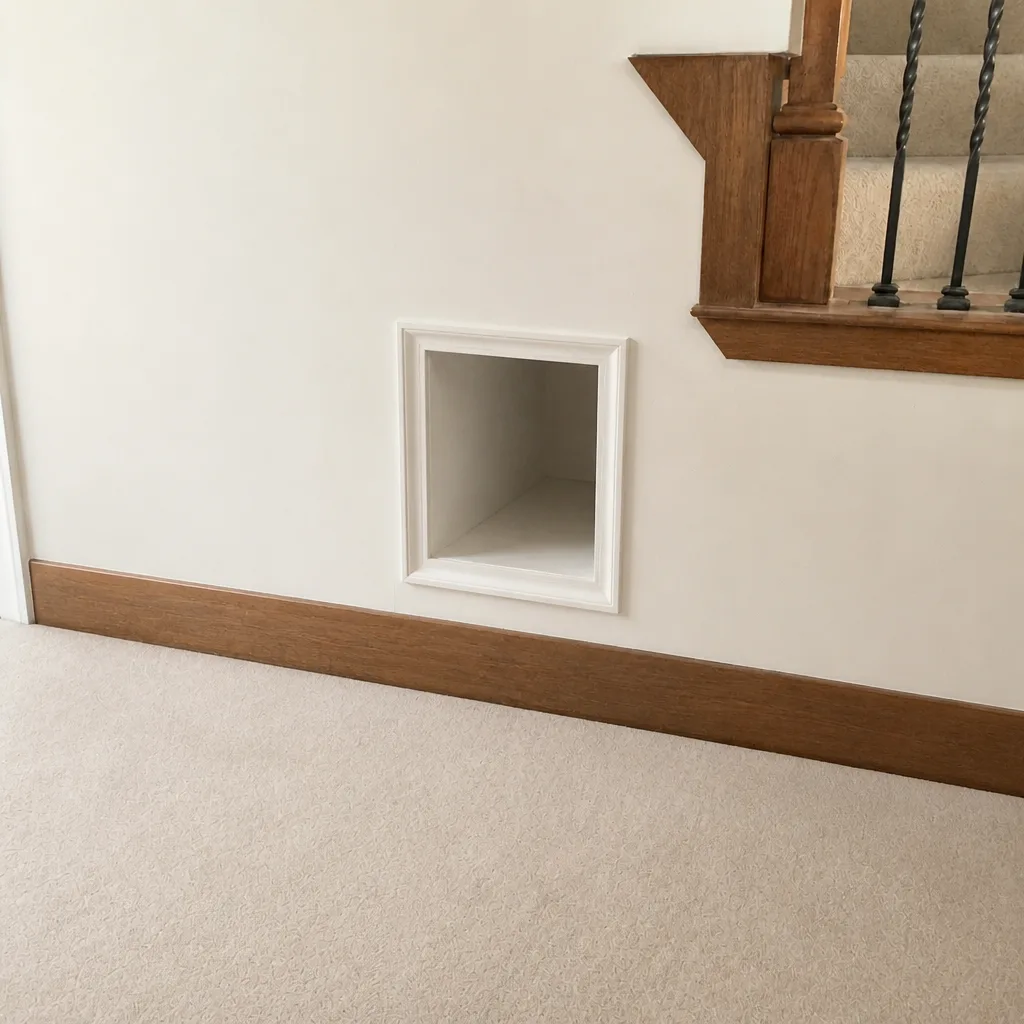 After
When to Call a Professional
Call a professional when you notice visible dust accumulating around supply registers faster than usual, when household allergy symptoms persist despite cleaning, when a home remodel has finished and construction dust has circulated through the system, or when the ductwork has never been inspected. A service call also makes sense when you’ve had a pest issue or water intrusion near ductwork, or when you’re moving into a home in Portland whose service history is unknown. And if the dryer is taking longer than it used to, that’s the cue for professional dryer vent cleaning without delay. On the repair side, we offer air duct repair as a standalone service for disconnected or crushed runs. Steadfast Air Duct Cleaning offers free estimates in Portland. Call (877) 957-0767. Our technicians have up to 8 years of experience and use professional-grade equipment, including Rotobrush and Nikro systems, with Abatement Technologies filtration on every job.
Frequently Asked Questions
A professional duct cleaning company should use three categories of equipment: a Rotobrush-style agitation system, a Nikro-style negative-air extraction machine, and Abatement Technologies-style HEPA filtration on the exhaust. Each performs a distinct function, and a complete job uses all three. A contractor who relies on a single machine is running a partial service.
Ask for the brand and model of each machine in writing and check the manufacturer’s data plate on the housing when the van arrives. Ask for the extraction unit’s CFM rating and how HEPA filtration is handled on the exhaust. A professional answers all three without hesitating; a shortcut contractor deflects to price.
Not always. Truck-mounted units are strong when the layout supports them, but a Nikro portable negative-air machine often outperforms on Portland crawlspace and low-clearance layouts. The number that matters is the machine’s rated airflow capacity and the pressure it holds at the working end, not whether it rides on a truck.
Every duct clean dislodges debris, and without HEPA filtration on the exhaust some of it gets recirculated into the living space. In Portland’s closed-winter months, when air exchange is low, recirculation is more noticeable. The Abatement Technologies filtration we use on every job exists to prevent that.
No. Dryer vent cleaning is a separate service with its own tools and its own safety purpose, because lint buildup is a documented fire risk. It should be treated as a specialist job, not an add-on. It’s one of the three services we offer, alongside air duct cleaning and duct repair.
Cleaning removes accumulated debris; repair addresses structural problems like disconnected runs, crushed flex duct, or leaks in the trunk. Cleaning a compromised system without fixing it leaves the problem in place and can compromise airflow after the clean. We offer air duct repair as a standalone service for exactly that reason.
The Bottom Line
The equipment question isn’t a technicality, it’s the most reliable predictor of job quality you can ask about. Rotobrush, Nikro, and Abatement Technologies are distinguishable in the field because they’re built for different functions: agitation, extraction, and HEPA filtration. A professional clean uses all three, matched to your Portland home’s duct layout. As a dedicated indoor-air specialist, we think homeowners should ask about equipment brands, CFM ratings, and exhaust filtration before they ever compare quotes. We’ve seen the difference that asking makes. Our three services, Air Duct Cleaning, Dryer Vent Cleaning, and Air Duct Repair, exist because a full-system fix requires all three capabilities. Licensed and insured, one flat price per system set before work starts, before-and-after photos of your own ducts, and a satisfaction guarantee. If you’re in the Portland area and want to walk through what a professional clean involves for your home, call us today for a free estimate at (877) 957-0767. We answer 24/7. Fast dispatch, 7am-7pm.
Written by the team at Steadfast Air Duct Cleaning.