
Last updated November 15, 2026
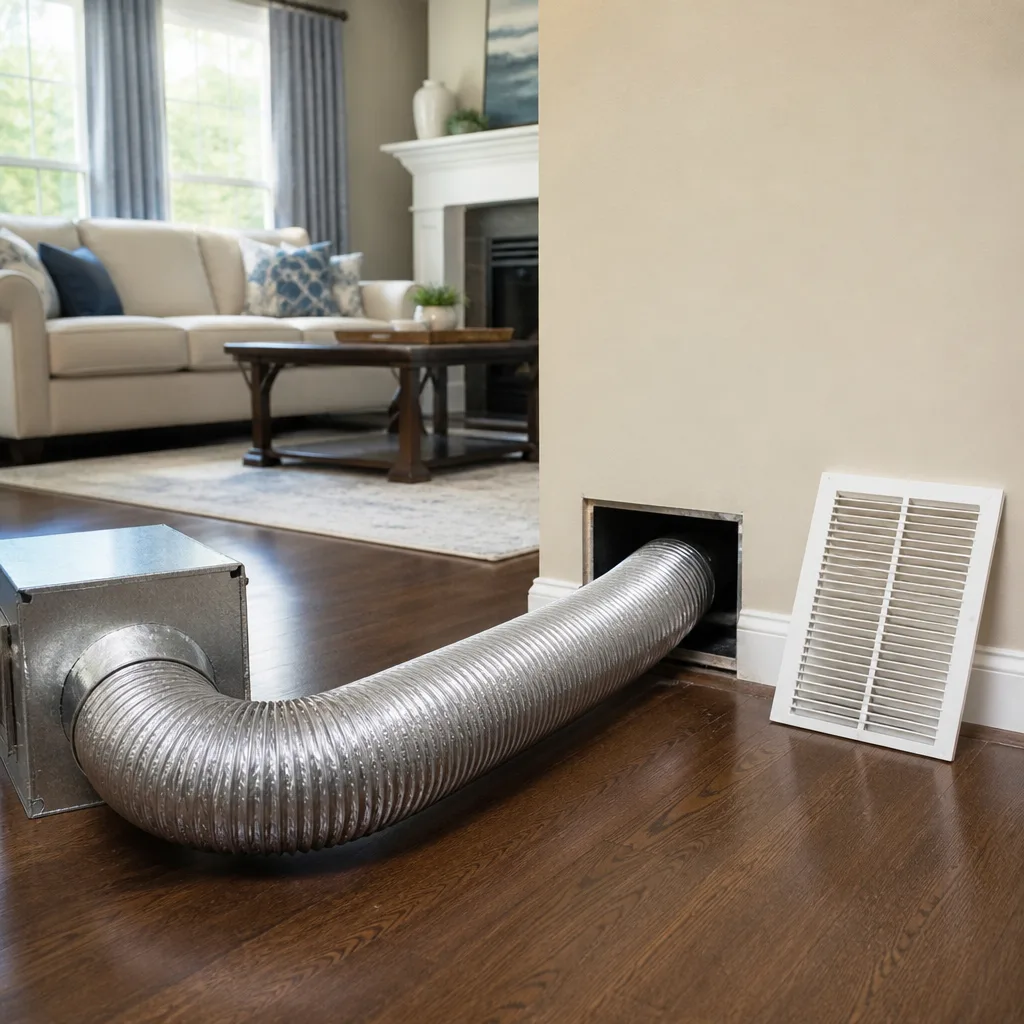 Whole-home duct cleaning
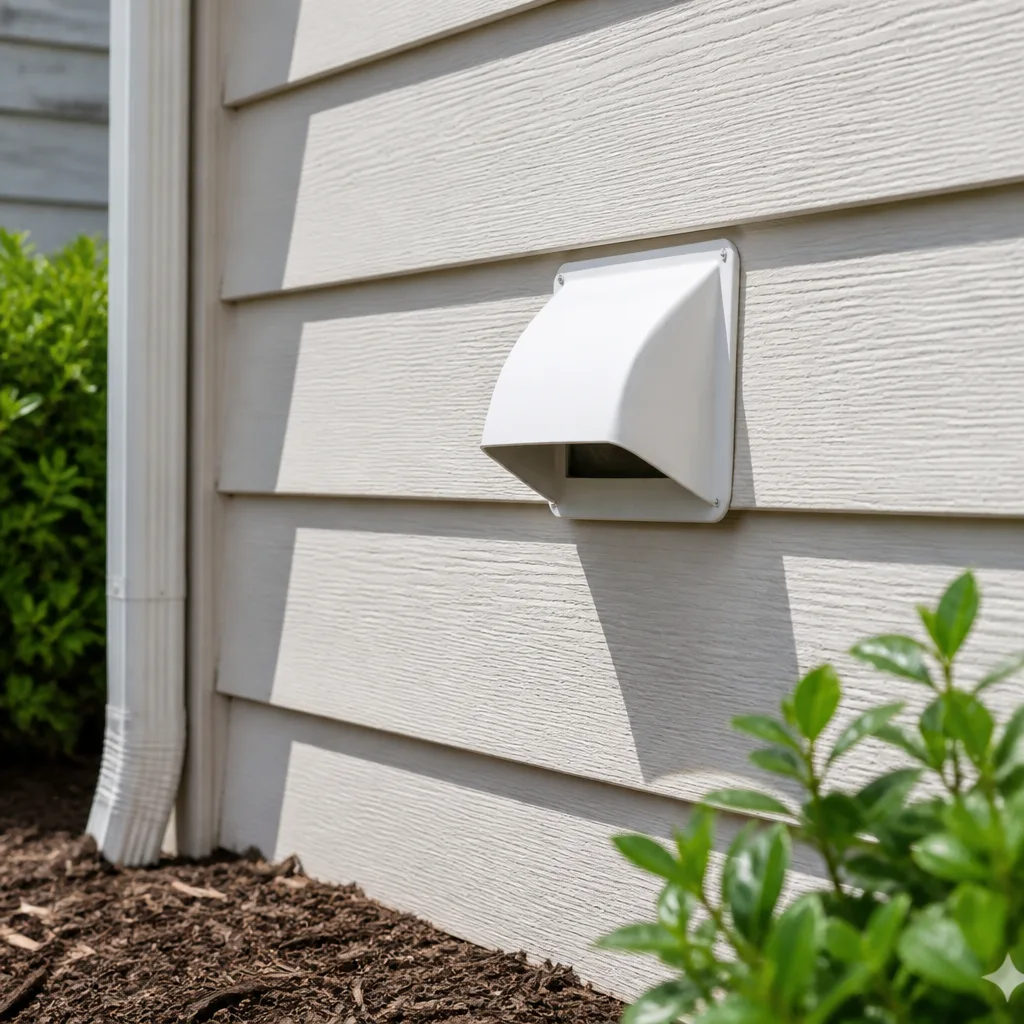 Dryer vent cleaning
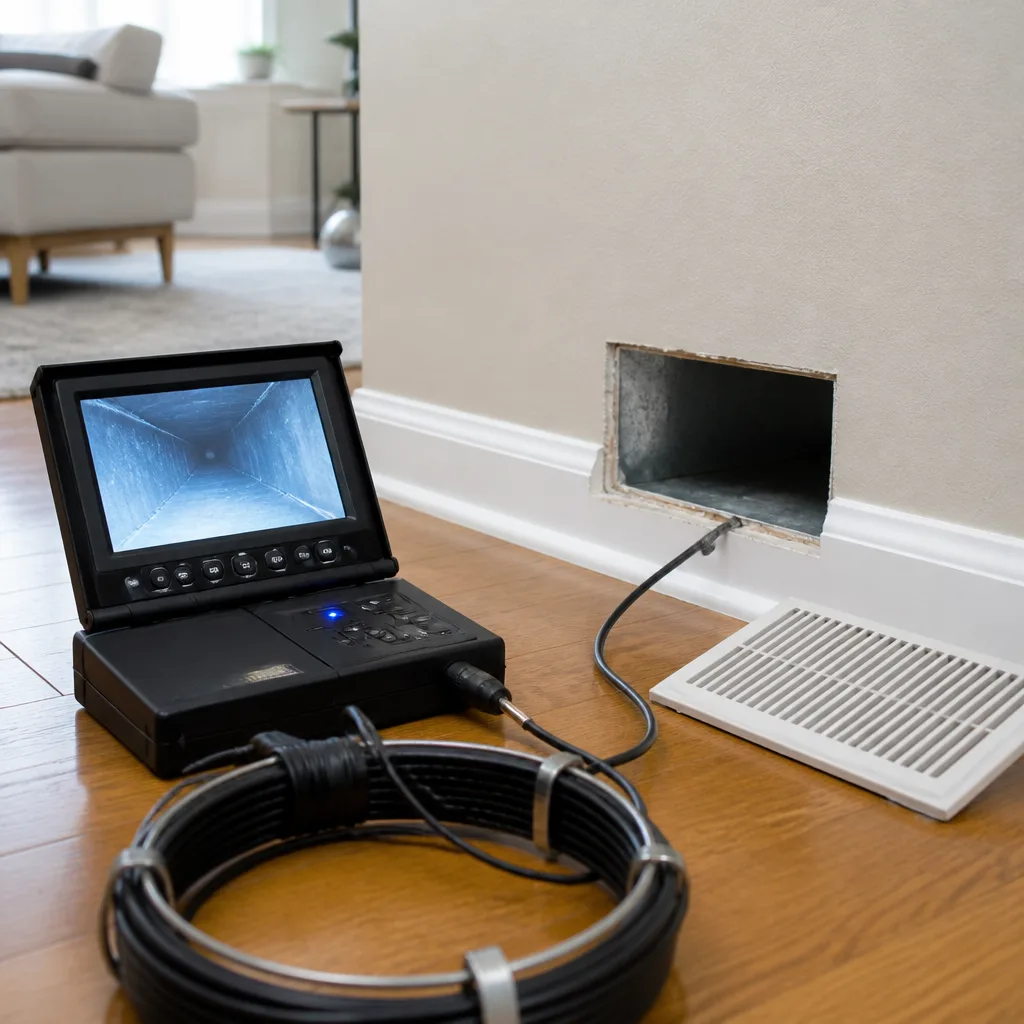 Camera inspection
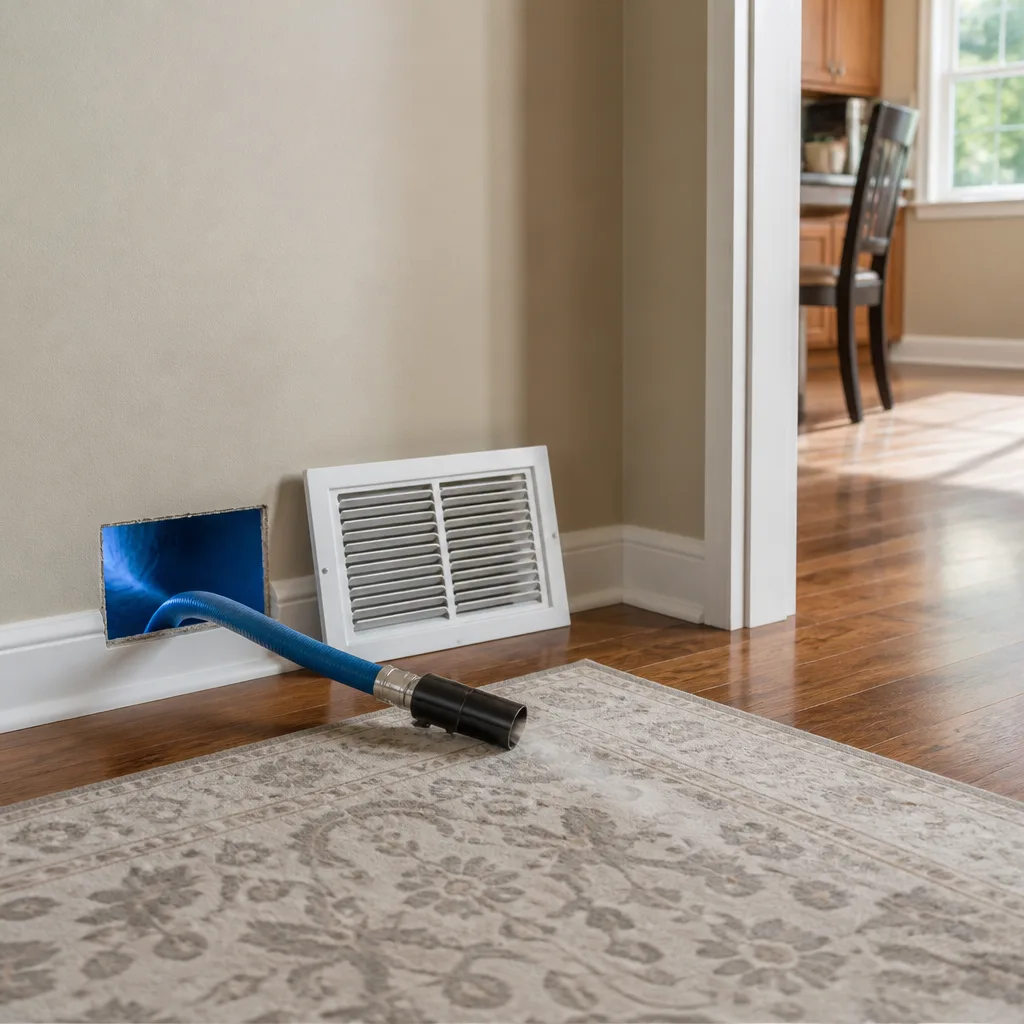 Sanitizing & deodorizing
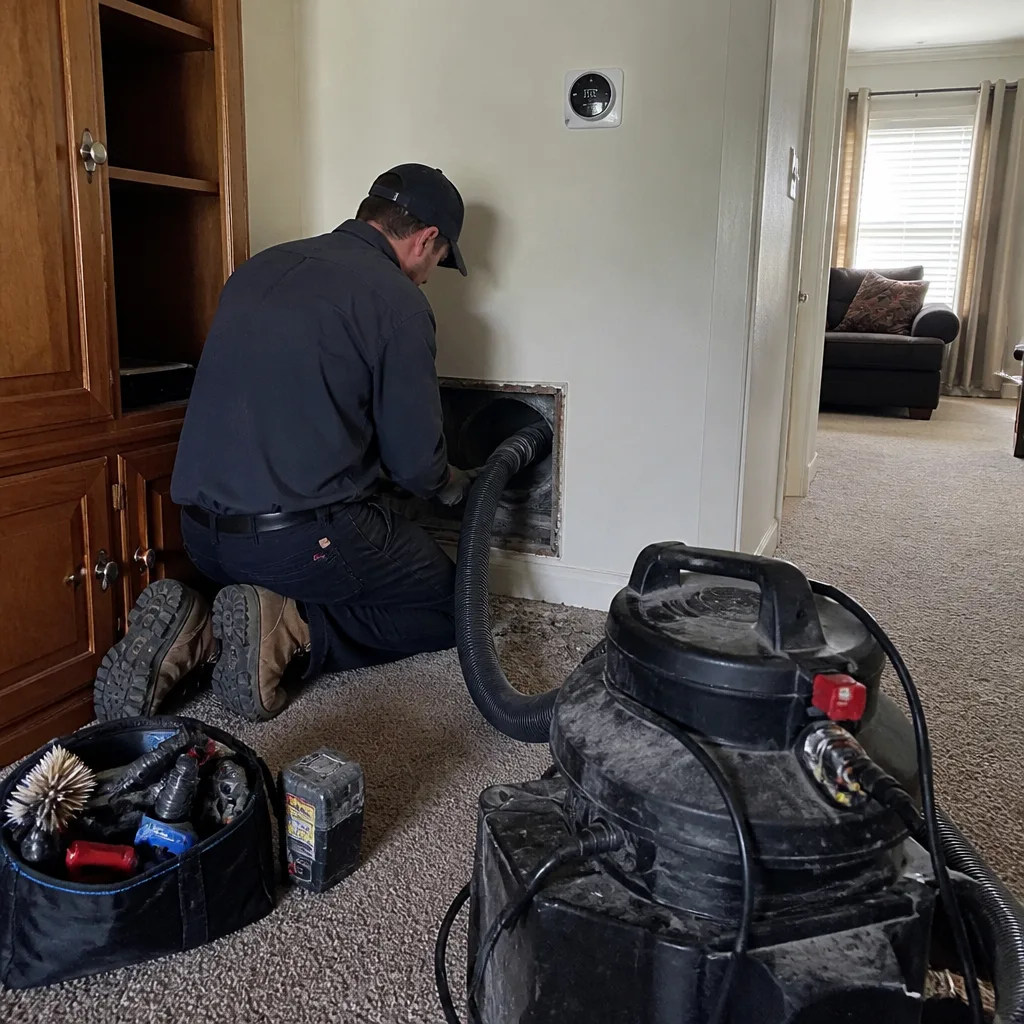
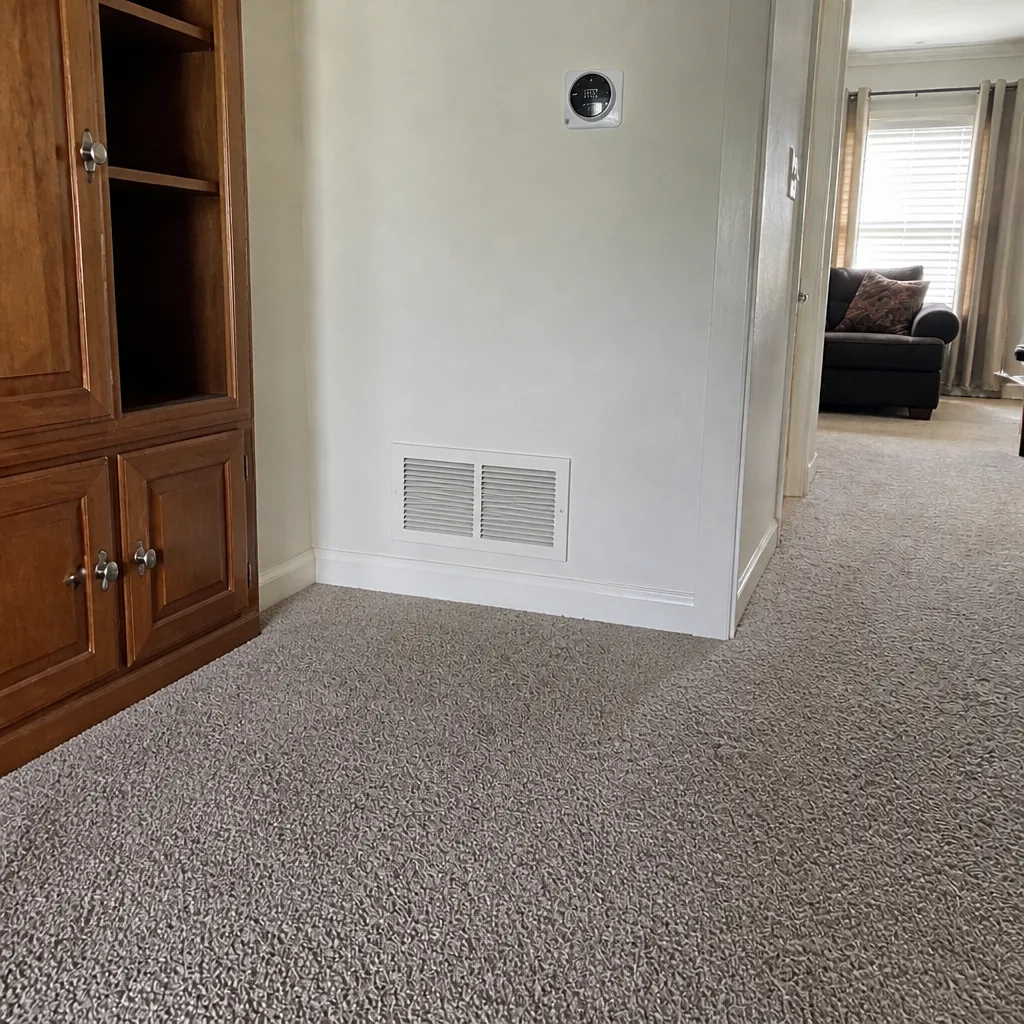
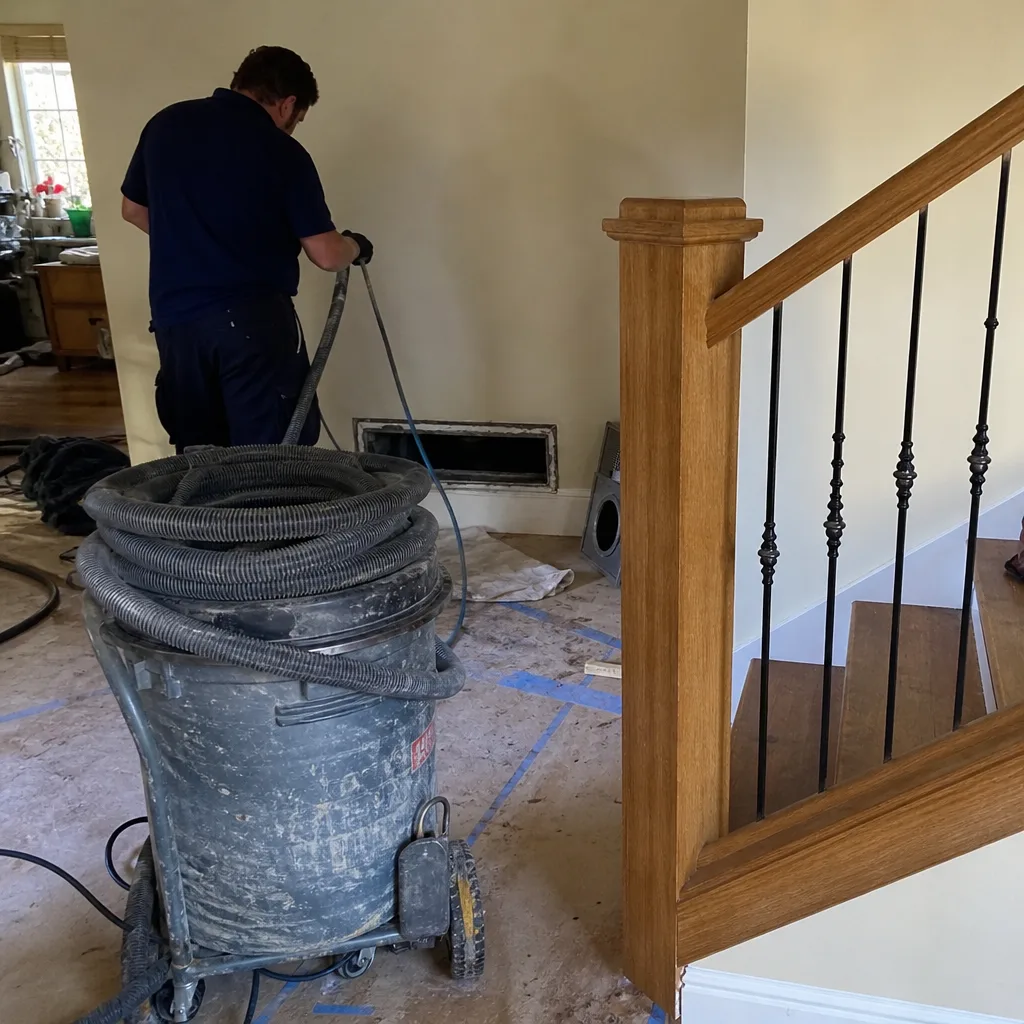
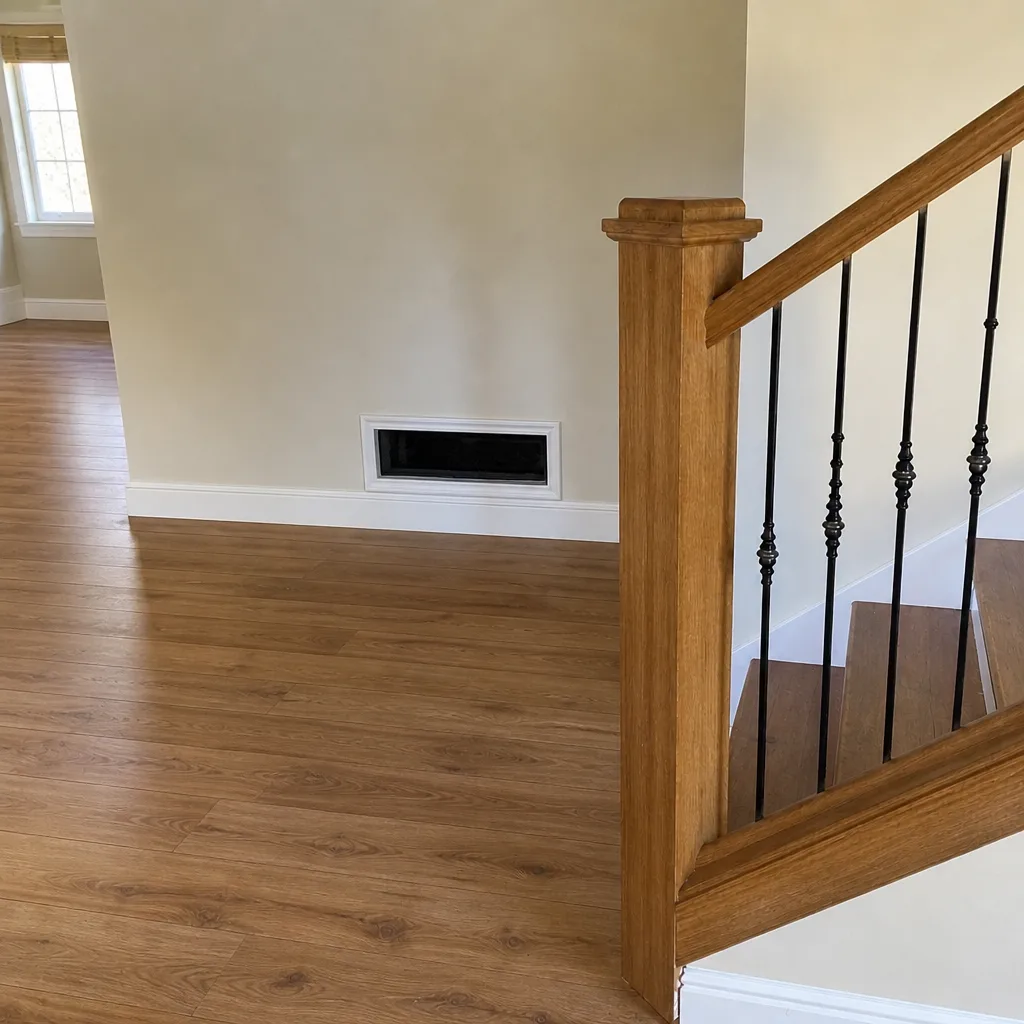
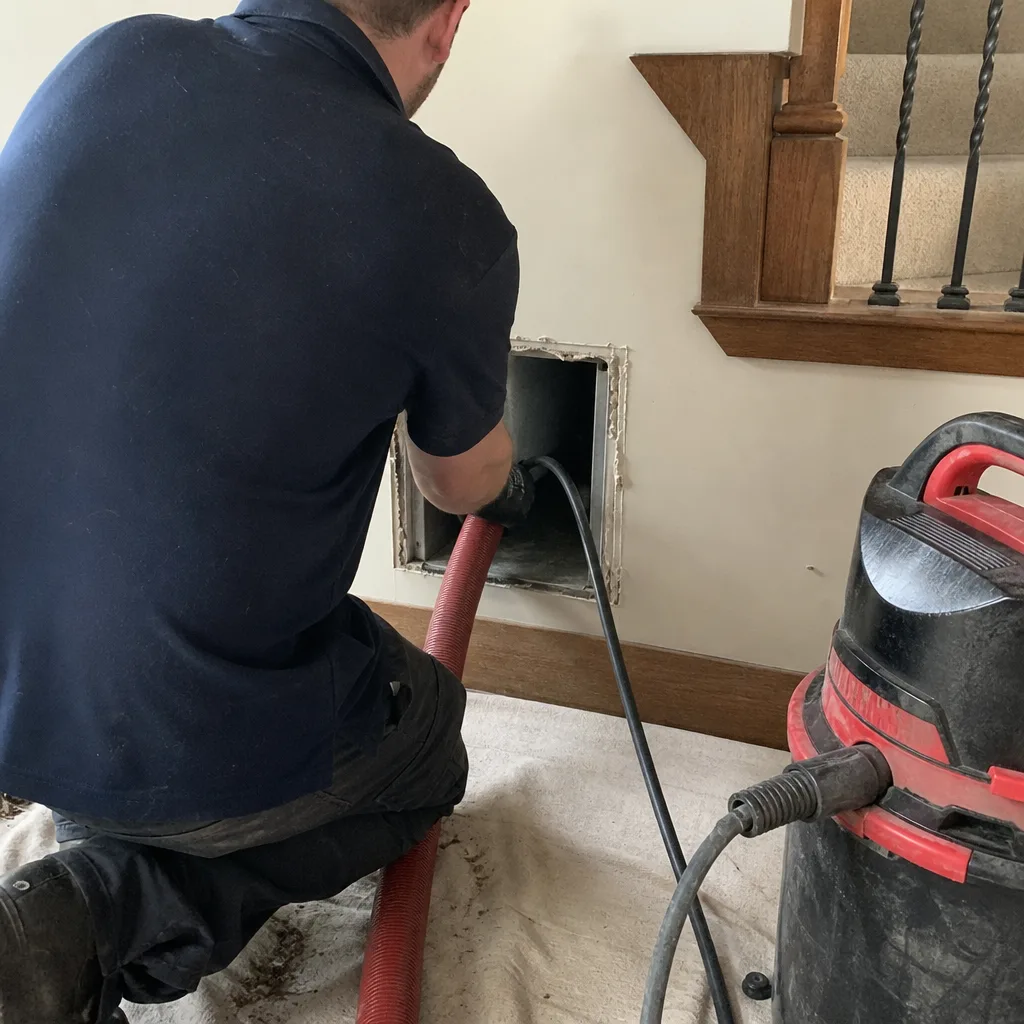
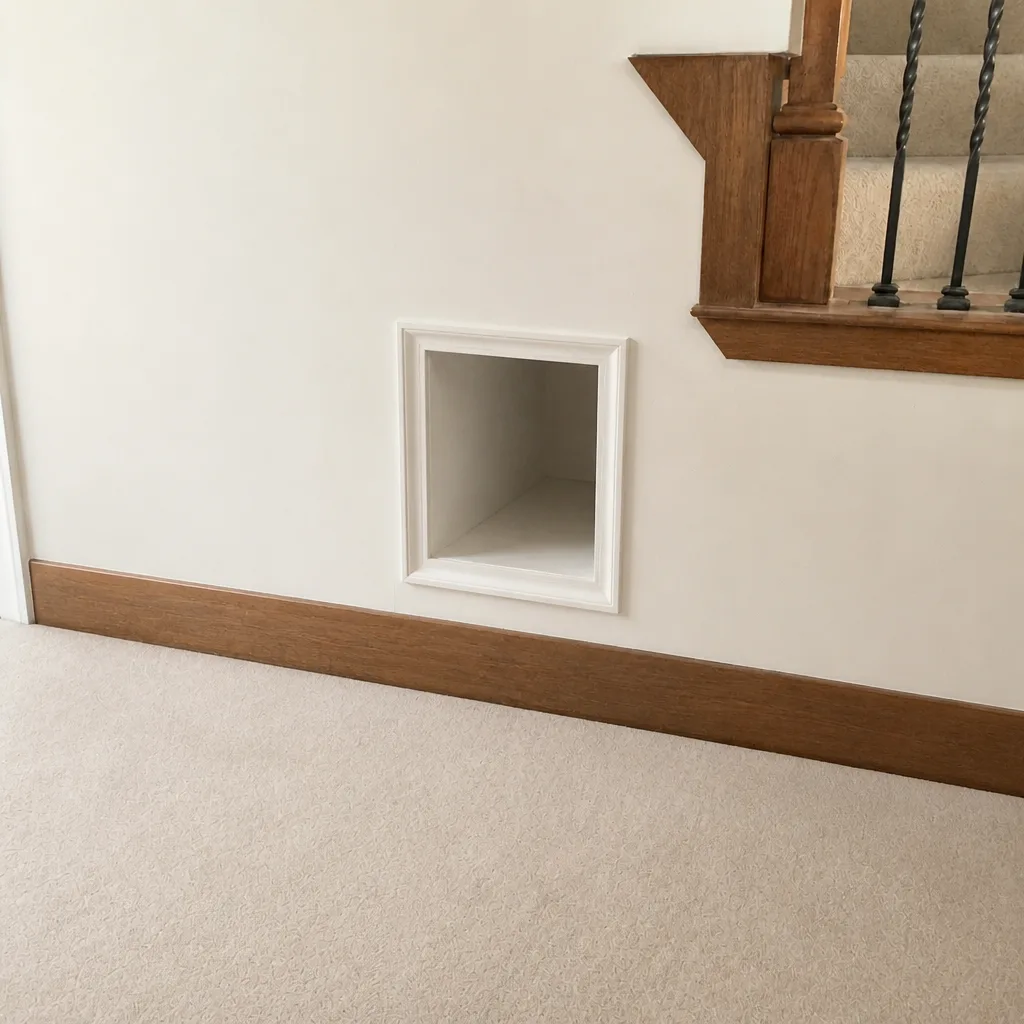
Whole-system duct and dryer vent check with before-and-after photos - you see exactly what came out of your vents
That "$99 whole-house special" is a bait ad - the real number appears once they are in your hallway, or the "clean" is a shop-vac at the register. We photograph the inside of your ducts before and after instead.
Air Duct Cleaning Maintenance Checklist for Portland Homeowners
The filter you change every 90 days is not protecting your ducts. It is protecting your furnace. Everything upstream of that filter, the whole network of supply and return runs feeding every room in your house, is accumulating debris on a schedule your HVAC manual never mentions. Most homeowners assume that because the filter looks dirty at the change interval, the ducts behind it must be fine. They are not the same system, and they do not get dirty at the same rate. What follows is a maintenance checklist written around the decisions you actually face between professional cleanings: what you can check yourself with a flashlight and a phone camera, what signals real trouble, and what genuinely needs equipment to diagnose in a Portland home.
Quick Answer
Most Portland homes need a professional air duct cleaning every three to five years, but that interval shifts based on pets, renovation dust, smoking, and wildfire smoke seasons. Between cleanings, homeowners should check supply and return registers room by room, inspect the dryer vent, and photograph duct interiors at each register so condition can be compared over time. Anything beyond surface dust, including visible debris buildup, pest evidence, or musty odors, warrants a professional inspection rather than a shop-vac attempt.
Styles & brands we work with
- Whole-home duct cleaning
- Dryer vent cleaning
- Camera inspection
- Sanitizing & deodorizing
Table of Contents
- The Room-by-Room Register Inspection Protocol
- Normal Dust vs. Contamination: What the Difference Looks Like
- How Often Should You Clean Ducts in Portland?
- The Dryer Vent Is a Non-Optional Checklist Item
- How to Document Duct Condition Over Time
- When Duct Repair Matters More Than Duct Cleaning
- What Professional Equipment Actually Does
- Common Mistakes to Avoid
The Room-by-Room Register Inspection Protocol
The most useful maintenance tool you own is the flashlight on your phone. You can inspect every register in a typical Portland home in about 25 minutes, and the process gives you a genuine baseline to compare against later. Do this once a season, ideally in early fall before the heating season kicks in and again in spring after the wet months have passed.
Here is the protocol we recommend to homeowners who call us and want to know whether they actually need a cleaning or just want reassurance:
- Remove every supply and return grille. Most are held by two screws or simple friction clips. Set them aside in one place so you do not lose hardware.
- Photograph each register opening straight-on with the flashlight angled into the first few inches of the boot. Take the photo before you touch anything.
- Photograph a second angle looking down the run if the duct is straight enough to see more than a foot inside. A phone camera reaches deeper than your eye will.
- Note the color and texture of any visible accumulation on the boot and the first section of duct. Light gray powder is normal. Dark, sticky, or fibrous material is not.
- Sniff the register, then step back. A faint dust smell is expected. A musty or sour odor that lingers after the system has run for ten minutes is worth a note.
- Label each photo by room and date in your phone’s camera roll so you can pull up a specific register later when comparing condition.
- Reinstall the grilles and note anything unusual on paper: a loose boot, a rattling run, a register that blows noticeably weaker than its neighbors.
Portland homes built in the mid-20th century in neighborhoods like Sellwood, Laurelhurst, and Alameda often have original sheet-metal trunks with flexible branch runs added during later remodels, so the visible condition can vary wildly from one register to the next. That is exactly why the room-by-room method matters. A single bad register tells you more than a general impression of the whole house.
Normal Dust vs. Contamination: What the Difference Looks Like
Every duct in every home accumulates dust. That is not the question. The question is whether what you are looking at is expected accumulation or something that indicates the system needs intervention. Here are the visual indicators that separate the two, in plain terms.
Normal accumulation
- Light gray or tan powder on the boot and the first few inches of duct, roughly the color of the dust on top of a door frame
- Thin, even coating that wipes off easily with a dry cloth
- No visible dark patches, no fiber, no debris that looks like it fell from somewhere
- The register grille itself dusts over on a normal schedule between cleanings
Signs of contamination that warrant a professional inspection
- Dark or sticky buildup on duct walls, especially near the return side, which often signals moisture or grease carrying dust into the system
- Visible fiberglass strands or crumbling duct liner inside the run, which points to deteriorating interior material that needs repair, not just cleaning
- Rodent or insect evidence: droppings, nesting material, or shed casings inside a register or boot
- Mold-like spotting, particularly in the return duct nearest a bathroom or laundry area where humidity runs higher
- Persistent musty odor that does not clear after the system runs ten to fifteen minutes
- Uneven airflow between registers on the same branch
- Debris visible on the far side of a flexible run when photographed with flash
Anything in the second list is worth a call. The key distinction is that a homeowner can confirm the presence of buildup with a camera, but cannot determine what it is, how deep the run is affected, or whether the duct itself has failed. That is the point where a professional inspection earns its keep.
How Often Should You Clean Ducts in Portland?
The honest answer is that there is no single interval that fits every home, which is why the “every three to five years” rule of thumb gets repeated so often. It is a starting point. Portland households push that interval in different directions depending on three or four variables that are easy to identify.
Here is how to think about the variables:
- Pets: A single short-haired dog or cat adds hair and dander to the return side at a noticeable rate. Two or more pets, or any pet with a double coat, can shorten the interval to every two to three years.
- Renovation work: Any remodeling project inside the house, from a bathroom refresh to a full kitchen gut, sends drywall dust and sawdust into the return system even with plastic sheeting up. A cleaning after the project closes out makes sense in almost every case.
- Smoking indoors: Tobacco smoke leaves a sticky residue on duct walls that traps dust and is not removable with a standard vacuum. Homes with indoor smoking need cleanings on a shorter interval plus potentially duct repair for degraded liner.
- Wildfire smoke events: Portland has had multiple summers with extended smoke intrusion from regional fires. Smoke carries fine particulate that settles on duct interiors, and homes that ran the system during heavy smoke events often need a cleaning the following season even if the interval would not otherwise be due.
- Home age and duct material: Older homes with unsealed sheet-metal trunks and homes with flexible branch runs added during remodels both collect debris at seams the factory would have sealed.
- Occupant health: Anyone in the household with asthma, allergies, or other respiratory sensitivity benefits from staying on the shorter end of the interval.
What you should not do is set a calendar reminder for “every three years, no matter what” and stop thinking about it. The room-by-room inspection gives you the evidence to adjust. If your Sellwood bungalow with two dogs shows dark buildup in the return every spring, you are on a two-year cycle. If your newer Beaverton build with no pets shows only light powder at the four-year mark, you can wait.
The Dryer Vent Is a Non-Optional Checklist Item
Of everything in this guide, this is the section most homeowners skip, and it is the one with the highest stakes. A clogged dryer vent is not a maintenance nuisance that shows up as slower drying cycles. Lint buildup in a dryer vent line is a documented residential fire risk, cited by the National Fire Protection Association as a leading cause of home fires involving dryers. The duct cleaning checklist is incomplete without it.
The inspection itself takes about five minutes and requires no tools beyond a flashlight:
- Pull the dryer out far enough to see the back connection, and unplug it from the wall before doing anything else.
- Disconnect the vent hose from the back of the dryer and from the wall collar, then look inside both ends with a flashlight.
- Check the flexible transition duct behind the dryer for kinks, crushing, or visible lint accumulation. Any crushed section is a restriction, not just a dust concern.
- Look at the exterior termination where the vent exits the house. The damper should open freely and close cleanly. Visible lint around the hood is a sign of buildup downstream.
- Note drying times. A load that used to finish in 40 minutes and now takes 70 is telling you the vent is restricted.
The NFPA fire risk angle is real, and it is the reason we treat dryer vent cleaning as a standalone service rather than an add-on that gets mentioned at the end of a duct cleaning visit. The line behind your dryer has different airflow, different debris, and much higher heat exposure than your supply ducts, and it needs its own inspection schedule.
If your dryer vent run is long, has multiple elbows, or routes through an interior wall in an older Portland home, professional cleaning is the safer check. The brush-and-vacuum work requires equipment designed for it, and trying to reach deep buildup with a shop-vac hose often pushes lint further down the run.
How to Document Duct Condition Over Time
Anyone who has ever called a duct cleaner and heard “your ducts are in bad shape” with no evidence knows the discomfort of taking that on faith. The flip side is just as real: some homes get sold a cleaning they did not need. Documentation solves both problems, and it is simple enough that any homeowner can maintain it with a phone and a shared folder.
Here is the system we recommend. It is the same kind of record a property manager would keep for a rental property, scaled down for a single-family home.
- Create a dated folder on your phone or in a cloud app called “Duct Condition” with subfolders by year.
- Photograph every register at the start of every season, before you touch anything, using the same angle each time so the comparison is honest.
- Include the return registers, usually the largest grilles on the wall or floor, since those accumulate debris fastest.
- Photograph the dryer vent connection behind the dryer each time you do the vent check.
- Keep a simple one-line log in a notes app: date, any notable observation, and whether a cleaning was done.
- Keep the service documentation from any professional cleaning, including the technician’s before-and-after photos of your own ducts.
- Bring the folder out when a contractor visits. A legitimate professional will look at your baseline photos and compare them to current condition rather than telling you what you must buy.
When we clean a system, we take before-and-after photos of the homeowner’s own ducts and hand them over. That documentation is what makes a five-year pattern visible. A before-and-after pair from one visit means something. Ten years of pairs tells you exactly how your specific home behaves, and that is more useful than any generic interval chart.
When Duct Repair Matters More Than Duct Cleaning
Cleaning removes debris. Repair addresses the conditions that let debris in and conditioned air out. The two are different services, and a duct system that needs repair usually also needs cleaning first so the technician can see what is actually going on.
We treat air duct cleaning as the front half of a full-system job, and duct repair as the back half. Here is what pushes a household into the repair column:
- Visible gaps at seams or joints where the trunk meets a branch, or where a boot meets the wall
- Disconnected or hanging flexible runs, common in homes where a remodel disturbed existing ductwork
- Ripped or crushed flexible duct, which restricts airflow and catches debris at the pinch point
- Deteriorating interior liner that sheds fibers into the airstream
- Rattling or whistling at a register that was not always noisy, which usually indicates a loose connection
A duct system that is leaking conditioned air into a crawlspace or attic is a system that pulls dust in from wherever the pressure imbalance points. Cleaning without sealing means the ducts will be dirty again on an accelerated schedule. When a Portland home has ductwork routed through a vented crawlspace or an unconditioned attic, the repair piece is often the more important one.
If your inspection turns up any of the items on that list, ask specifically whether the cleaning will be followed by a repair assessment. The answer tells you a lot about the company.
What Professional Equipment Actually Does
Homeowners sometimes ask whether a strong shop-vac and a long hose will do the job. It will not, and the reason is not horsepower. It is air movement through a sealed system, agitation of the duct walls, and containment of what gets dislodged.
A shop-vac pulls a small volume of air from one point. A source-removal machine moves enough air through the full cross-section of a duct to carry loose debris back to the collection unit rather than stirring it up. The agitation piece matters just as much. Attached dust does not release from duct walls under vacuum alone, which is why professional systems use rotary brushes or compressed-air whips matched to the duct’s material. Flexible liner, sheet metal, and ductboard each need a different approach.
Containment is the third piece, and the one most people never ask about. When you dislodge years of debris from inside a duct, it goes into the air in the house unless something is capturing it. We run Abatement Technologies air filtration equipment on every job specifically to capture dislodged particulate during the clean, so what comes out of the ducts does not recirculate through the living space while the work is happening.
We clean with Rotobrush and Nikro systems, which are the same class of equipment used by commercial contractors. Our technicians have up to 8 years of experience with these systems, and part of that time is spent knowing which attachment fits a given run and which ducts need to be left alone until a repair is completed. If your home also has a Honeywell or Aprilaire whole-home air quality system tied into the ductwork, the cleaning has to account for that equipment rather than work around it. Familiarity with those systems lets us put the duct work in the context of the air quality setup as a whole, which is the difference between a surface clean and an informed one.
Common Mistakes to Avoid
- Assuming the filter date tells you anything about the ducts. The filter catches what it can before the furnace, but returns and branches upstream accumulate on their own schedule, so a clean filter month says nothing about duct interior condition.
- Skipping the dryer vent check. Homeowners who run a full room-by-room duct inspection and then forget the dryer vent are skipping the single highest-risk component in the house, and in Portland that risk does not depend on the season.
- Trying to clean ducts with a shop-vac and a hose. Consumer vacuums do not move enough air, cannot agitate attached dust, and have no containment for what they dislodge, so you can end up redistributing dust throughout the house.
- Calling only when something smells. Odor is a late signal. By the time musty air reaches a register, the buildup that produces it has usually been there long enough to make the cleaning bigger than it needed to be.
- Not documenting anything. Without baseline photos, a homeowner has no way to compare a contractor’s claim against reality, which is why honest documentation is worth insisting on from any service you hire.
- Signing off on a cleaning when the ducts need repair. If a company cleans and leaves without addressing visible gaps, disconnected runs, or deteriorating liner, the ducts will be dirty again on a faster cycle than they should be.
- Ignoring the crawlspace or attic routing. Portland homes with ducts running through unconditioned spaces often need sealing and repair work that a cleaning alone cannot address, and it helps to ask the question before the technician arrives.
See the difference
 Before
 After
 Before
 After
 Before
 After
When to Call a Professional
Call a professional if your register inspection turns up any of the warning signs in the contamination list: dark or sticky buildup, visible fiber or liner damage, pest evidence, persistent musty odor, or airflow that is noticeably weaker at one register than another. Call as well if you have not had a cleaning in over five years, if a major renovation recently closed out, if wildfire smoke intrusion was heavy during the past season, or if your household includes multiple pets or anyone with respiratory sensitivity. Any of these situations makes the case for a professional inspection without guesswork. If you are not sure whether your observations cross the line, that is also a reason to call. Steadfast Air Duct Cleaning offers free estimates in Portland; call (877) 957-0767. We answer 24/7. Fast dispatch from 7am to 7pm, Sunday through Friday, and we are closed Saturday. The written estimate sets the final price, and you see before-and-after photos of your own ducts before we consider the job finished.
Frequently Asked Questions
Most Portland homes fall into a three to five year cleaning cycle, with the interval shortened by pets, renovation work, indoor smoking, wildfire smoke years, or occupants with allergies. Your own register inspection drives the decision more accurately than a general rule. When in doubt, photograph the registers every season and let the trend tell you. If the buildup is visibly worse in consecutive photos, it is time. Call (877) 957-0767 for an exact quote; estimates are free.
Pricing depends on the number of systems in the house, the number of registers, and whether the job includes duct repair or dryer vent cleaning alongside the main clean. Because we quote a flat price per system agreed before any work starts, the number you receive is the number you pay, with no per-vent line items. Call (877) 957-0767 for a written estimate, which is free.
A low teaser price is usually a door-push for per-vent pricing once the technician is on site, or a quick surface pass with consumer-grade equipment that leaves the ducts barely touched. Neither reflects an honest whole-system clean. Ask what equipment the company uses, how dislodged debris is contained during the job, and whether they hand over before-and-after photos. Then compare. If a quote sounds too low to cover the work, it probably does not. Call (877) 957-0767 for a straight answer on what a proper clean involves.
Before-and-after photos of your own ducts are the only reliable answer. You should see the interior of specific registers and returns in the “before” set and the same locations in the “after” set, dated and labeled. We provide those photos as standard. If a company cannot show you documentation of your own system, that is the reason to keep looking.
Reducing accumulated debris and dust in the duct system can reduce what gets recirculated into the breathing air, which makes a difference for allergy sufferers and anyone with respiratory sensitivity. Cleaning does not replace a whole-home air filtration system, but it is the foundation those systems sit on. If you have a Honeywell or Aprilaire system already in place, cleaning your ducts keeps the filtration working as intended. Call (877) 957-0767 for a free estimate.
Most damaged ductwork can be repaired rather than replaced. Sealing gaps, patching or replacing failed flexible runs, reseating disconnected boots, and addressing deteriorated liner all fall under duct repair, which we handle as a standalone service. A technician assesses the specific damage during an inspection and tells you what is repairable. If you suspect damage from your own inspection, call (877) 957-0767 for an assessment.
The Bottom Line
The most valuable maintenance habit for a Portland homeowner is not the cleaning itself. It is the documentation between cleanings. A phone camera, a dated folder, and a 25-minute room-by-room walkthrough each season tell you more about your system than any generic interval chart. Dryer vents get the same check on the same schedule, because the fire risk is the one variable you cannot treat as a nice-to-have. When your own photos show the buildup worsening faster than the calendar suggests, that is when you call a professional, and it helps to have the photos ready so the conversation starts on solid ground. The Steadfast Air Duct Cleaning team works with Rotobrush, Nikro, and Abatement Technologies equipment and offers duct repair alongside cleaning so the job is finished, not just started.
If your inspection points to work that needs professional eyes and equipment, call (877) 957-0767 for a free estimate. We answer 24/7. Fast dispatch from 7am to 7pm, Sunday through Friday, closed Saturday. One flat price per system agreed before work starts, before-and-after photos of your own ducts, and a written estimate that sets the final price.
Written by the team at Steadfast Air Duct Cleaning.